Glow Peptides for Menopause Skin: FAQs, Safety & Alternatives
6 minute read
Summary
Many midlife women are turning to “glow peptides” for firmer, brighter skin, but the term can describe very different products ranging from topical skincare ingredients to injectable wellness therapies. Menopause-related estrogen decline changes skin structure, hydration, and collagen levels, which helps explain why these trends feel especially appealing during perimenopause and postmenopause. Evidence for topical peptide skincare is stronger than for many oral supplements and cosmetic peptide injections, while safety and long-term data for newer peptide-based wellness products remain limited.
Just when you thought skincare couldn’t get any more buzzword-y, you may have bumped into the latest anti-aging term online: “glow peptides.”
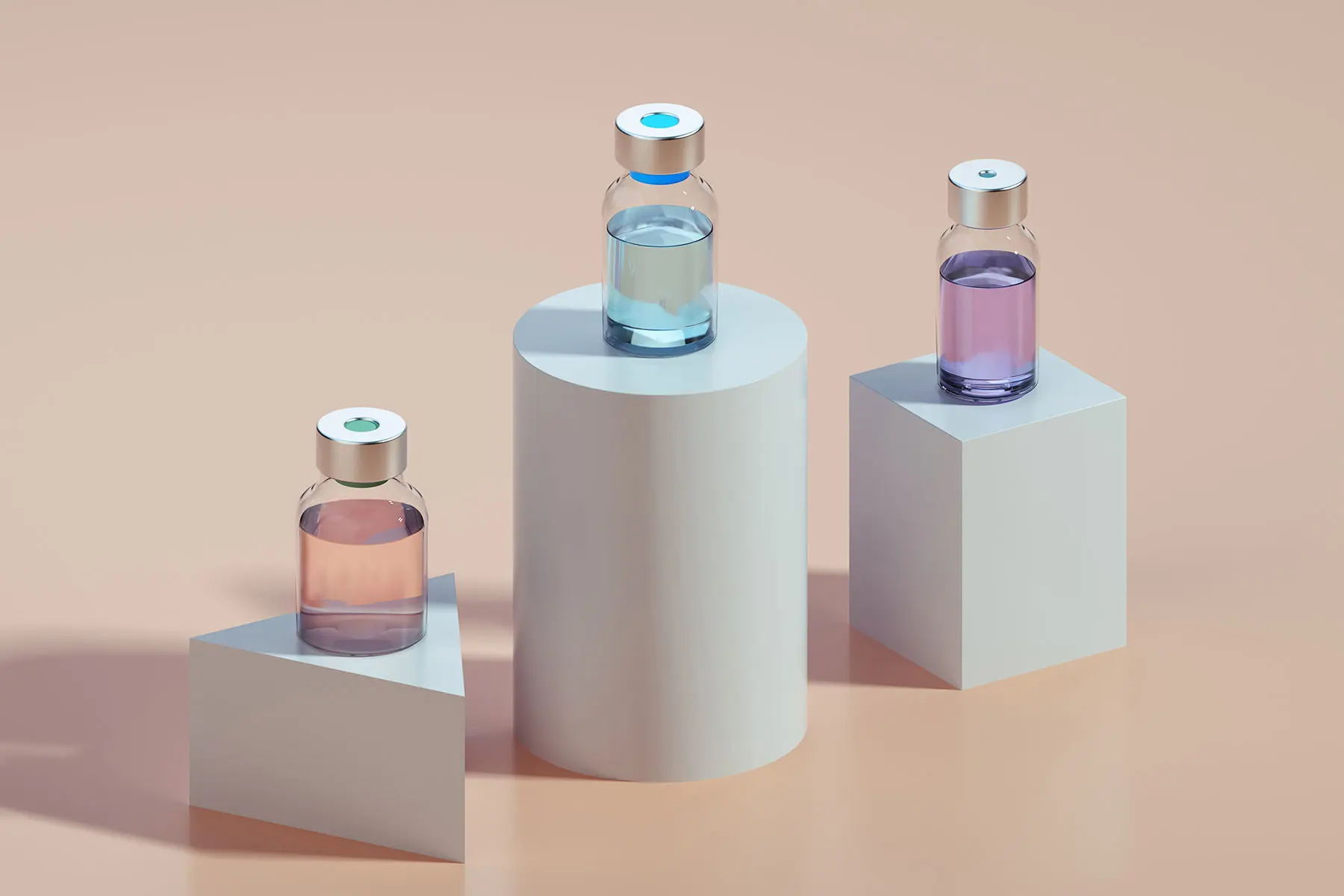
The so-called glow peptide stack typically combines three peptides, BPC-157, TB-500, and GHK-Cu, and is promoted for everything from tissue repair and wound healing to collagen production and “younger-looking skin.”
But “peptide” is a broad term, and evidence that one peptide has certain benefits doesn’t mean every peptide or combination will offer the same thing. How you use them matters, too. Applying peptides to your face, for example, is very different from injecting them into your body.
Ahead, learn more about what we currently know (and don’t know) about glow peptides, plus other evidence-backed ways to care for your skin during perimenopause and postmenopause.
Why Does Your Skin Change So Much During Menopause?
As your estrogen levels decline during perimenopause and menopause, your skin can lose collagen, hydration, elasticity, and thickness. You may start noticing more dryness, fine lines, sagging, or a crepey texture.
Of course, some of these changes are a normal part of getting older, and years of sun exposure eventually make themselves known. But lower estrogen levels can contribute to these changes, which helps explain why something promising to boost your skin collagen and repair tissue can sound enticing in midlife.
What Are “Glow Peptides,” Exactly?
Peptides are short chains of amino acids, which are the building blocks of proteins. The viral “glow peptide” stack, however, typically refers to a specific combination of BPC-157, TB-500, and GHK-Cu.
BPC-157 and TB-500 are often marketed for tissue repair and recovery based on emerging research, whereas GHK-Cu, a copper-binding peptide, has been studied for its potential role in wound healing and collagen production.
The problem is that combining three compounds with promising biological mechanisms doesn’t automatically create an effective, FDA-approved anti-aging treatment.
There’s currently limited clinical research showing that this particular injectable stack can safely or meaningfully reverse the skin changes linked with menopause.
Are Injectable Glow Peptides Safe?
While peptide-based medications are used in medicine (like GLP-1s for treating obesity and type 2 diabetes), that doesn’t mean every injectable peptide out there has undergone the same rigorous safety and efficacy testing. This is especially true given the fact that glow peptides aren’t FDA-approved for cosmetic or anti-aging purposes.
That doesn’t necessarily mean they can’t be used, but it does mean we still have a lot to learn about how well they work, their long-term safety, and how they may affect your skin and overall health. Some of the ingredients may have been studied for other purposes, but we don’t have the same level of rigorous clinical research to confirm the safety and effectiveness of these peptide combinations when used for anti-aging.
If you’re curious about trying injectable peptides, you’re not alone! Just be sure to talk with a qualified healthcare professional first. Ask about potential risks, side effects, and product quality.
Keep in mind that once you inject something into your body, it can have side effects that go beyond your skin. We know this from other peptide-based therapies. For instance, in one clinical trial of the peptide drug abaloparatide in postmenopausal women with osteoporosis, researchers documented temporary increases in participants’ heart rate after treatment.
Sure, this study didn’t look at glow peptides specifically, but it's an important reminder that peptides of any kind can affect different parts of your body. Always be sure to do some digging before trying glow peptides and consider talking with your care team about whether they could interact with your medications or affect an existing health condition. Additionally, bear in mind that once injected, the medication cannot be removed. Your body just needs to process. This occurs with GLP-1, for example, and nausea that can last for an extended period after the injection. Side effects improve as your body clears the medication.
At the very least, before trying an injectable glow peptide (especially one offered at a med spa or wellness clinic), always ask exactly what’s in it and what research supports its safety.
What About Topical Peptides?
Topical peptides are a different story because they’re applied directly to your skin rather than injected into your body. Some specific peptides have been studied for their potential to support collagen production and improve signs of skin aging, but that depends on the peptide and formulation.
Oral collagen peptides are another category altogether. Research suggests collagen supplements may modestly improve skin hydration and elasticity, but swallowing collagen doesn’t send it directly to the wrinkles around your eyes, for instance.
“Many people take collagen supplements hoping for smoother, firmer, more youthful-looking skin. But it’s not quite that simple,” according to Dr. Kathryn Williams, a board-certified OB/GYN. “Your body breaks oral collagen down into smaller peptides and amino acids, which can be used throughout the body. They don’t go directly to your skin and automatically become new collagen. Some studies show modest improvements in skin hydration and elasticity, but we still need more research to understand how well these supplements really work.”
What Ingredients Have Stronger Evidence For Menopause Skin?
If your skin changes are largely driven by declining estrogen levels, it makes sense to consider ingredients that target some of those changes directly.
Topical estrogen-based skincare, including estriol, may help support collagen production, skin thickness, hydration, and elasticity.
Then there’s tretinoin, a prescription retinoid with decades of research behind it. It can help boost collagen production and improve fine lines, skin texture, and discoloration over time. One thing to note: Tretinoin can cause dryness, peeling, and irritation, especially if your skin has become more sensitive during menopause.

Tretinoin Face Cream Rx
Tretinoin + Niacinamide
$90.00
That doesn’t mean there’s no room for topical peptides. They may actually be a nice addition to your routine, but you don’t necessarily need to make them the star of the show.
Alloy’s Power Pair, for example, combines prescription tretinoin with an estriol-based face cream, which can help tackle several skin concerns you may have during the menopausal transition at once.

Power Pair
M4 Face Cream Rx & Tretinoin Face Cream Rx
$210.00 $240.00
Less is More
Menopausal skin can become drier and more reactive to everyday skincare products, so layering a retinoid, exfoliating acid, vitamin C serum, peptide treatment, and whatever else your algorithm convinced you to buy this week can irritate your skin.
Go back to the foundations and start with a gentle cleanser, moisturizer, and daily sunscreen. From there, add targeted ingredients based on what you actually want to address, whether that’s dryness, fine lines, hyperpigmentation, loss of firmness, or redness.
If you want peptides in the mix, consider Alloy’s M4 Glow & Go Set, which combines estriol, peptides, ceramides, and hydrating ingredients in a topical formula designed for midlife skin, or Alloy’s Copper Peptide Cream, which is specifically formulated for midlife skin.

Glow & Go Set
M4 Face Cream Rx, M4 Face Serum Rx, & M4 Eye Cream Rx
$299.00 $399.00
So, Are Glow Peptides Worth It?
There simply isn’t enough clinical research yet to say injectable glow peptides are worth the hype for menopause skin. Before trying one, ask exactly what you’re being injected with, what evidence supports using the combination for cosmetic purposes, and any known side effects.
Most importantly, keep your actual goal in sight. If your skin has become drier, thinner, or less firm since entering perimenopause, you may get more mileage out of topical treatments that directly address those changes and have stronger research behind them, such as estriol.
Frequently Asked Questions
What are glow peptides, and can they reverse menopausal skin changes?
The "glow peptide" stack typically refers to an injectable combination of three peptides: BPC-157, TB-500, and GHK-Cu, which are marketed for tissue repair, wound healing, and collagen production. However, combining these compounds does not make them an approved anti-aging treatment. There is currently limited clinical research demonstrating that this injectable stack can safely or meaningfully reverse the loss of collagen, thickness, and hydration linked to declining estrogen during menopause, and it is not FDA-approved for cosmetic purposes.
Are injectable glow peptides safe for anti-aging?
Injectable glow peptides have not undergone the rigorous clinical testing required to confirm their long-term safety or effectiveness for cosmetic use. Unlike topical products, injected peptides circulate throughout the body and can cause systemic side effects, such as cardiovascular changes or prolonged adverse reactions. Additionally, once a peptide is injected, it cannot be removed and must be processed and cleared by the body over time.
What skincare ingredients have stronger evidence for menopausal skin?
For skin changes driven by declining estrogen, topical treatments with direct clinical support are more established than injectable peptide stacks. Topical estrogen-based skincare, such as estriol, helps support collagen production, skin thickness, elasticity, and hydration. Prescription tretinoin also has decades of research confirming its ability to boost collagen and improve fine lines and texture, while topical peptides and gentle basics (cleanser, moisturizer, and sunscreen) can serve as supportive additions to a streamlined routine.
Related Content
https://www.myalloy.com/blog/is-it-safe-to-put-estrogen-on-your-face-the-science-behind-it
https://www.myalloy.com/blog/how-alloy-m4-products-with-estriol-help-with-crepey-skin
https://www.myalloy.com/blog/increase-collagen-production-after-40
https://www.myalloy.com/solutions/m4-estriol-peptide-face-serum
https://www.myalloy.com/blog/tretinoin-cream-what-is-it-and-how-to-use-it-a-beginners-guide
https://www.myalloy.com/blog/are-testosterone-and-testosterone-pellets-safe-to-use-in-perimenopause
Citations
Holly N Wilkinson, Matthew J Hardman. The role of estrogen in cutaneous ageing and repair. Maturitas 2017;103:60-64. doi:10.1016/j.maturitas.2017.06.026. PMID:28778334.
View sourceYakir S Levin. Cosmetic dermatology in menopause. Menopause 2022;29(3):344-350. PMID:35013059.
View sourceJacques Emile Rioux, M Corinne Devlin, Morrie M Gelfand, Wilfred M Steinberg, Douglas S Hepburn. 17β-estradiol vaginal tablet versus conjugated equine estrogen vaginal cream to relieve menopausal atrophic vaginitis. Menopause 2018;25(11):1208-1213. doi:10.1097/GME.0000000000001220. PMID:30358715.
View sourceFelicia Cosman, Linda R Peterson, Dwight A Towler, Bruce Mitlak, Yamei Wang, Steven R Cummings. Cardiovascular Safety of Abaloparatide in Postmenopausal Women With Osteoporosis: Analysis From the ACTIVE Phase 3 Trial. J Clin Endocrinol Metab 2020;105(11):3384-95. doi:10.1210/clinem/dgaa450. PMC:PMC7500469. PMID:32658264.
View sourceSimone de Vries Lentsch, Eloísa Rubio-Beltrán, Antoinette MaassenVanDenBrink. Changing levels of sex hormones and calcitonin gene-related peptide (CGRP) during a woman's life: Implications for the efficacy and safety of novel antimigraine medications. Maturitas 2021;145:73-77. doi:10.1016/j.maturitas.2020.12.012. PMID:33541566.
View sourceManuel Sánchez-Prieto, Marina Romero-Domínguez, Rodrigo Orozco, Mariella Lilue, Daniel María Lubián-López, Silvia P González, et al.. Incretin-based therapies in peri- and postmenopausal women with obesity: an expert position statement from the Spanish Menopause Society. Maturitas 2026;213:109101. doi:10.1016/j.maturitas.2026.109101. PMID:42664617.
View source
Subscribe
Go ahead, you deserve to
feel fantastic
By subscribing you agree to our Terms of Service & Privacy Policy.