How Alloy M4 Products with Estriol help with Crepey Skin
6 minute read
Summary
Crepey skin is a common concern during perimenopause and menopause. Many women notice their skin becoming thinner, drier, less elastic, and more finely wrinkled during this stage of life. These visible skin changes are linked in part to declining estrogen levels, which affect skin structure and hydration.
Interest in topical estrogen has grown because estrogen plays an important role in maintaining skin thickness, elasticity, and moisture. Below, we discuss how topical estrogen may help support skin during midlife and how Alloy’s M4 Rx products may fit into a daily skincare routine.
Why Crepey Skin Often Appears During Perimenopause and Menopause
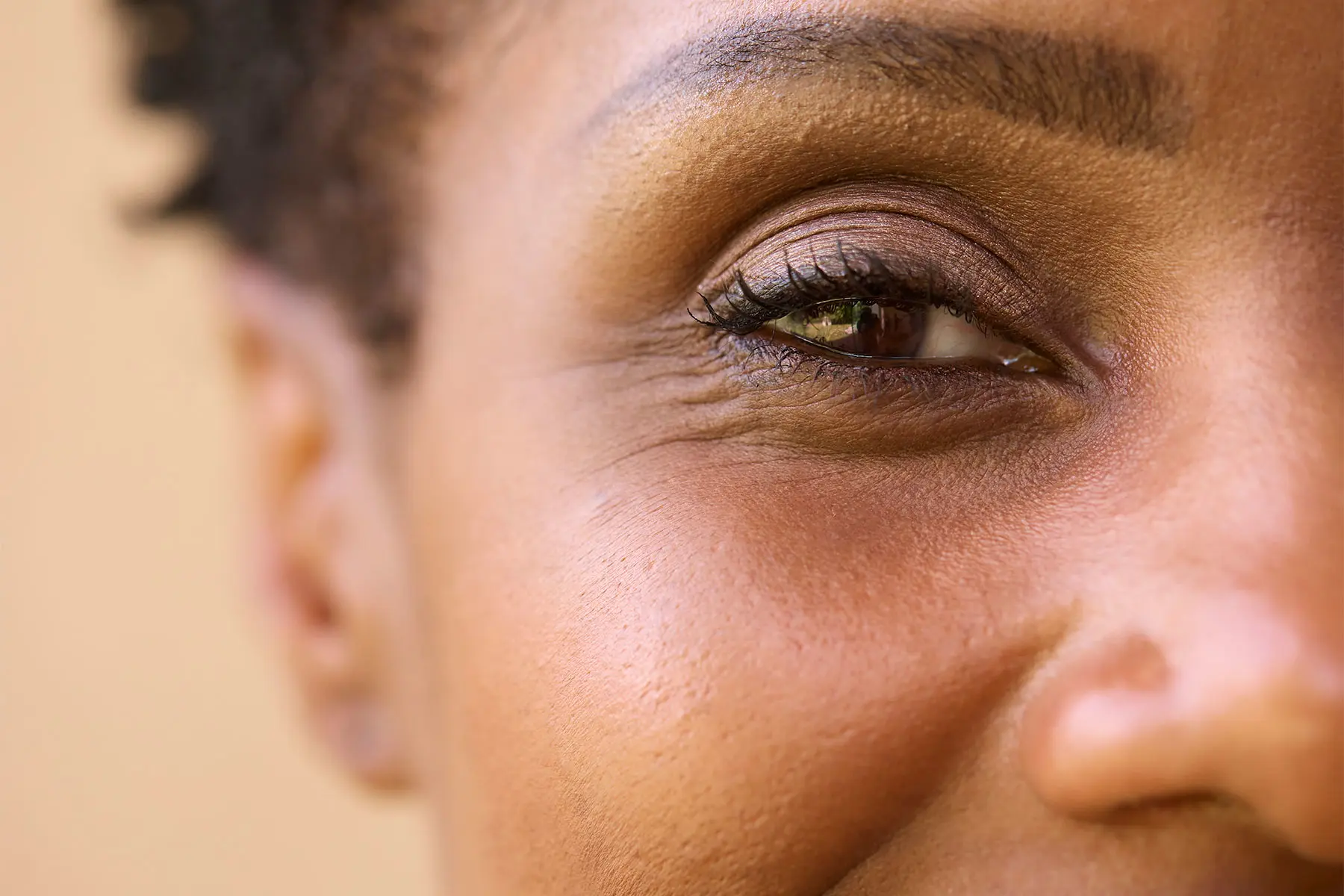
Crepey skin refers to skin that appears thin, fragile, finely wrinkled, and less elastic. Unlike deeper expression lines, crepey skin often has a loose, paper-like texture. It commonly appears on the face, neck, chest, and around the eyes.
Skin contains estrogen receptors involved in collagen production and repair. As estrogen levels decline, structural changes can occur throughout the skin, including reductions in dermal thickness, collagen content, and elasticity. Oil production may also decrease, contributing to dryness, tightness, flaking, dullness, and rough texture.
Dryness can further affect the skin barrier, making skin feel more sensitive or reactive over time. In addition, skin repair processes naturally slow with age, while reduced elasticity contributes to sagging and crepey texture.
Hormonal changes during perimenopause and menopause often overlap with intrinsic aging and environmental damage, making skin changes more noticeable during midlife. Areas with frequent sun exposure may show these effects earlier because ultraviolet radiation also affects collagen and elastin over time.
What Is Estriol and How Is It Different From Other Estrogens?
The body naturally produces three main forms of estrogen: estradiol, estrone, and estriol. During the reproductive years, estradiol is generally considered the strongest naturally occurring estrogen. After menopause estrone becomes the more prominent form of estrogen produced. Estriol is a weaker naturally occurring estrogen and it is often used in commercially available and compounded prescription treatments for perimenopause and menopause symptoms.
In skincare formulations, estriol is used to target hormone-related skin changes by interacting directly with the skin. Topical estriol products differ from systemic hormone therapy in that they are designed for localized skin effects and are not intended to affect the entire body.
They also differ from other skincare treatments and products such as retinoids and peptides. Retinoids primarily initiate cell turnover and surface renewal while peptides are used to support skin firmness and collagen. Estriol- based products instead focus on addressing the skin changes associated with estrogen decline.
"As a clinician specializing in menopausal medicine, I have observed that when used under the guidance of an experienced medical professional, incorporating studied formulations of topical estriol into a facial skincare regimen can be a safe and clinically effective way to improve overall skin quality." - Dr. Deepti Gandni, MD MSCP
Evidence for Topical Estriol Use to Support Crepey or Thinning Skin
Research has evaluated topical estrogen therapies for aging and estrogen-deficient skin. Some studies reported improvements in hydration, elasticity, skin thickness, wrinkle appearance, and overall texture following consistent use over time. Evidence also suggests that topical estrogen may help support collagen density within the skin.
Topical estriol is intended to support skin quality, hydration, and elasticity rather than completely reverse skin aging. Because structural skin changes occur gradually, visible improvements often require consistent use over several months.
Individual response may vary depending on baseline skin condition, age, cumulative sun exposure, and consistency of use.

M4 Body Treatment Rx
Estriol + Peptides
$195.00
How M4 Face Cream Rx Uses Estriol to Support Menopausal Skin
M4 Face Cream Rx is a prescription estriol treatment formulated by Alloy Health for perimenopausal and menopausal skin. Made with estriol and moisturizing skincare ingredients, the formulation is designed to address dryness, thinning, and loss of elasticity associated with hormonal skin aging. It can be used alongside most other skin care products.
Unlike products primarily focused on surface exfoliation or cell turnover, M4 Face Cream Rx is formulated to support hydration, skin texture, and elasticity.
Clinical observations associated with the formulation reported improvements in hydration, texture, and elasticity over approximately 12 weeks of consistent use in study participants.

M4 Face Cream Rx
Estriol
$150
Aging Skin Around the Eyes and M4 Eye Cream Rx
Skin around the eyes is thinner and contains less supportive tissue than many other areas of the face. Because this area is delicate, structural skin changes during midlife may become visible earlier than in other areas of the body. Frequent facial movement, sun exposure, and environmental stressors can also make the eye area more prone to fine wrinkling over time.
Hormonal changes during the menopause transition may further contribute to visible changes in this region. Reduced collagen and elasticity can contribute to fine lines, laxity, and crepey texture around the eyes, while dryness may make these changes appear more pronounced.
Eye creams and serums are often formulated specifically for delicate skin around the eyes. Prescription estriol-containing eye products are designed to support hydration and skin quality in this area while targeting some of the visible skin changes associated with estrogen decline.
M4 Eye Cream Rx combines estriol with additional supportive ingredients intended to support hydration and firmness around the eyes.

M4 Eye Cream Rx
Estriol + Peptides
$90.00
M4 Face Serum Rx and Menopausal Skin
Menopausal skin concerns often involve multiple overlapping changes including dryness, thinning, dullness, and reduced firmness. Combination skincare formulations may help address several visible concerns at once.
M4 Face Serum Rx combines estriol with ingredients such as peptides and hyaluronic acid. Peptides are commonly included in skincare formulations aimed at supporting firmness and elasticity. Hyaluronic acid helps attract and retain water within the skin, supporting hydration and temporarily improving skin smoothness and surface texture.

M4 Face Serum Rx
Estriol + Peptides + Hyaluronic Acid
$159.00
Serums are often layered beneath other skincare products as part of a broader skincare routine. M4 Face Serum Rx can be layered underneath moisturizer and sunscreen to support hydration and overall skin feel as part of a consistent menopause skincare regimen.
What Results Can You Realistically Expect From Topical Estriol?
Topical estriol has been shown in many women to help support hydration, elasticity, and smoother-looking skin texture. Improvements are typically gradual rather than immediate, and skincare studies suggest that visible changes may occur over approximately 8 to 12 weeks or longer.
Using these products consistently is more important than short-term intensive use. Results vary depending on age, baseline skin condition, previous environmental exposures, and skincare habits.
Topical estriol is designed to support skin quality rather than fully reverse the effects of aging or sun damage. These formulations work best when used as part of a long-term daily skincare routine that also includes moisturization and sun protection. While topical estriol is not intended to completely eliminate wrinkles or laxity, it may produce healthier feeling skin over time during menopause, by giving structural support to the skin from within.
Frequently Asked Questions
How does topical estriol differ from other common skincare ingredients like retinoids or peptides?
While retinoids primarily focus on initiating cell turnover and surface renewal, and peptides are used to support skin firmness and collagen, estriol-based products serve a different purpose. They are specifically designed to target the skin changes associated with the decline of estrogen during perimenopause and menopause. By interacting directly with estrogen receptors in the skin, estriol addresses the root hormonal causes of thinning, dryness, and loss of elasticity rather than just focusing on surface exfoliation or general structural support.
Why does crepey skin become more noticeable during the transition into menopause?
Crepey skin, which is characterized by a thin, paper-like texture and reduced elasticity, often appears during midlife because skin contains estrogen receptors that are vital for collagen production and repair. As estrogen levels drop during perimenopause and menopause, the skin undergoes structural changes including a reduction in dermal thickness and collagen content. This hormonal shift often overlaps with natural aging and environmental factors like sun exposure, which further damages collagen and elastin, making the skin appear more fragile and wrinkled.
What kind of results can be expected from using estriol face creams and how long do they take to appear?
Visible improvements from topical estriol are typically gradual and require consistent use, as structural skin changes occur over time. Clinical observations and studies suggest that it generally takes approximately 8 to 12 weeks of daily application to see improvements in hydration, skin texture, and elasticity. While these products can help the skin feel healthier and provide structural support from within, they are intended to support skin quality rather than completely reverse the effects of aging or significant sun damage.
Related Content
Citations
David A Sullivan, Benjamin D Sullivan, James E Evans, Frank Schirra, Hiroko Yamagami, Meng Liu, et al. Androgen deficiency, Meibomian gland dysfunction, and evaporative dry eye. Ann N Y Acad Sci 2002;966:211-22. PMID:12114274.
View sourceBrincat MP, Muscat Baron Y, Galea R. Estrogens and the skin. Climacteric. 2005;8(2):110-123. PMID:16096167.
View sourceArcher DF. Postmenopausal skin and estrogen. Gynecol Endocrinol. 2012;28 Suppl 2:2-6. PMID:22849791.
View sourceWilkinson HN, Hardman MJ. The role of estrogen in cutaneous ageing and repair. Maturitas. 2017;103:60-64. PMID:28778334.
View sourceEdwin D Lephart, Frederick Naftolin. Menopause and the Skin: Old Favorites and New Innovations in Cosmeceuticals for Estrogen-Deficient Skin. Dermatol Ther (Heidelb) 2021;11(1):53-69. PMID:33242128.
View sourceWilkinson HN, Hardman MJ. A role for estrogen in skin ageing and dermal biomechanics. Mech Ageing Dev. 2021;197:111513. PMID:34044023.
View sourceBianca Viscomi, Mariana Muniz, Sonja Sattler. Managing Menopausal Skin Changes: A Narrative Review of Skin Quality Changes, Their Aesthetic Impact, and the Actual Role of Hormone Replacement Therapy in Improvement. J Cosmet Dermatol 2025;24 Suppl 4(Suppl 4):e70393. PMID:40847905.
View source
Subscribe
Go ahead, you deserve to
feel fantastic
By subscribing you agree to our Terms of Service & Privacy Policy.