Hot Flashes and Anxiety: What’s the Connection?
9 minute read

Summary
Hot flashes and anxiety frequently overlap in women experiencing perimenopause, with both conditions sharing symptoms such as sweating, flushing, and a racing heart. Hormonal fluctuations, particularly in estrogen and progesterone, disrupt the hypothalamus and can trigger hot flashes, while anxiety activates the body's stress response, leading to similar physical sensations. Differentiating between the two is important, as effective treatments—including hormone replacement therapy and cognitive behavioral therapy—can help manage symptoms and improve quality of life.
You’re going about your day when all of a sudden, an intense wave of heat crashes over you. You become flushed and start to sweat. Your heart is racing, working overtime. You might also feel weak, dizzy, or nauseated.
Is it a hot flash? Severe anxiety? Both? Whatever it is, it’s not very pleasant.
But the answer isn’t always clear-cut, since hot flashes and anxiety each can manifest in similar ways. What’s more, research suggests that women who are prone to anxiety symptoms might be somewhat more apt to suffer hot flashes once they reach perimenopause. And, of course, someone who’s caught off-guard by a run-of-the-mill hot flash might feel surprised and anxious, even if they don’t routinely experience anxiety.
To sort through the differences, it helps to understand what causes severe hot flashes as well as why anxiety can literally make you sweat.
If you struggle with menopausal hot flashes, you are not alone. Alloy helps women find easy, effective menopausal solutions online. Out of the 47 million women entering menopause each year, only 6 percent receive adequate menopausal care.
If you’re one of us—a woman who would benefit from online menopause care—take our assessment. Alloy offers access to a variety of clinicians who can help eligible customers manage their menopause symptoms with ongoing support and medically-approved menopause solutions, including estradiol pills or patches.
How Hot Flashes Happen
Hot flashes are the most common symptom of menopause, with over 80 percent of women reportedly experiencing them. These brief surges in body temperature tend to occur most during perimenopause, which is the stage that precedes the total absence of your periods (menopause). It usually lasts between 4 and 7 years, but can be shorter or longer.
Although the exact mechanism that causes hot flashes isn’t fully understood, hormonal changes clearly play a starring role.
Here’s how:
Your estrogen and progesterone levels can be pretty erratic during perimenopause. In addition to controlling your monthly cycle while you’re still menstruating, these hormones also send signals to the hypothalamus, colloquially known as your brain’s thermostat. The aforementioned hormonal fluctuations during this period can mess with the hypothalamus so that you end up thinking your body temperature is higher than it actually is. Meanwhile, everyone else in the same room feels just fine, of course.
One theory is that transitioning to menopause narrows your “thermoneutral zone”— the baseline temperature range in which you’re comfortable and not sweating or shivering. As a result, it becomes a lot easier for you to go from feeling normal to overheated in a snap.
Whenever your body thinks it’s too hot, it takes action to cool you down: Blood flow to your skin increases, making you feel hot, and then you sweat, cooling down as the moisture evaporates.
A simple way to think of it is that your body’s thermostat is extra sensitive and quick to react.

Why Anxiety Makes You Sweat
No matter your age or where you are in the menopause transition, you probably know what it feels like to develop clammy hands before a date or an important client meeting. When you’re stressed, you might also perspire more.
This is because, when you get anxious, your body’s natural “fight-or-flight” response kicks in.
More specifically, your adrenal glands, which are controlled by the hypothalamus (which is also responsible for temperature regulation), release stress hormones. This includes adrenaline and cortisol, which make your heart rate increase and prompt you to breathe more quickly.
These hormones also stimulate two types of sweat glands to kick into action. Yep, strange as it may sound, there’s actually more than one kind of sweat:
Regular sweat. This is the kind of sweat that’s designed to cool you down on a hot day, and it comes from the eccrine glands. It’s mostly made up of water, salt, and potassium, and it evaporates quickly.
Stress sweat. So-called psychological sweat (i.e., stress sweat) comes from the apocrine glands and contains fatty acids and proteins. It tends to linger on your body, as it doesn’t evaporate as quickly as regular sweat.
When the body goes into fight-or-flight mode during stress and anxiety, people usually produce both types of sweat.
Anxiety, Panic Attacks, and Perspiration
Sometimes it’s easy to figure out why you’re perspiring. If you’re outside in the sun on a hot day and you start to sweat, it makes sense that your body would want to cool down. If you’re worried about a big presentation and your hands get clammy, that’s anxiety.
Where it starts to get tricky is when you go beyond run-of-the-mill nerves and shift into severe anxiety. This can crop up in the form of panic attacks or anxiety that’s so severe and sudden that it disrupts day-to-day life.
Generalized anxiety disorder symptoms include:
Not being able to control your worries
Overthinking everyday things and catastrophizing (defaulting to imagining the worst-case scenario)
Feeling jumpy and on edge
Being irritable and restless
Not being able to concentrate and getting easily distracted
Sleep issues and fatigue
Physical tension and body aches, usually in the stomach or head
Feeling lightheaded and sweating
Difficulty swallowing
And while generalized anxiety and panic attacks can coexist or at least have some similar symptoms, they are distinct from one another. These are the symptoms that usually accompany a panic attack:
Feeling an overwhelming sense of doom or lack of control
Trembling or shaking
Getting short of breath and lightheaded
Sweating
Racing heart
Nausea and stomach pains
Feeling like you’re choking
This is why some people think they’re having a heart attack or that they’re dying during what turns out to be a panic attack. And, seeing as some of these symptoms overlap with the symptoms of hot flashes, it makes sense that hot flashes and anxiety are often confused.

Hot Flashes or Anxiety: What’s Making You Sweat?
If you’ve found yourself getting sweaty and flushed and the cause isn’t obvious, you might have to do a little detective work to sort it out.
Some factors to consider:
Your age: Hot flashes often strike in the 40s, as women go through perimenopause and approach menopause. By comparison, panic attacks can start at any age, but usually start before age 25. In other words, if you’re in your mid-to late-40s and have never had a panic attack before, your flashes are likely linked with changing hormones.
Location on your body: Menopause-related hot flashes usually start in the face, neck, or chest. While a panic attack can make your face flushed, it’s far more likely to make your palms or underarms sweat.
Triggers: Both panic attacks and menopausal hot flashes can come on seemingly without warning, at any time of day or night. (Night sweats are hot flashes that happen while you’re snoozing; however, anxiety can cause or worsen nighttime sweating as well.) For people who get frequent panic attacks, there are often noticeable patterns: Someone who is claustrophobic, for instance, might find that they have panic attacks more often in crowded or tight spaces.
Simultaneous symptoms: No matter how much you sweat, how flushed your face is, or how sudden it comes on, the biggest clue has to do with your emotional state. While someone who’s having a panic attack might not understand what’s going on (especially if they haven’t had one before), they will probably still have a deep sense of fear or danger.
A panic attack is almost always accompanied by a sense of impending doom or danger, even if the person experiencing it can’t pinpoint exactly what’s so scary. You might feel like you’re having a heart attack or that you’re about to die. Fortunately, panic attacks are usually short-lived and not physically dangerous, despite feeling that way.
Hot flashes, on the other hand, are primarily about the physical sensation of heat and the discomfort that it can cause.
What If It’s Both Menopause and Anxiety?
While it would be nice to be able to keep menopausal hot flashes and anxiety in two totally separate boxes, the truth is that these problems sometimes overlap. Some research even suggests that women who have pre-existing anxiety disorders (including but not limited to panic disorder) might be more likely to experience hot flashes when they approach menopause, though the reason why isn’t totally clear.
At the same time, many women find the menopause transition itself stressful, even if they never meet the criteria for a full-blown anxiety disorder.
Whatever the root(s) of your problem, it’s best not to ignore it—especially if it’s making you uncomfortable or interfering with the overall quality of your life. Whether or not your hot flashes are related to an anxiety challenge, studies suggest that cognitive behavioral therapy can help women better manage their symptoms of perimenopause.
So, what should the next steps be? It’s a good idea to talk to a primary care doctor. From there, you can figure out the best course of treatment, whether that’s menopause hormone therapy (MHT), lifestyle changes, seeing a mental health professional, or some combination of all three.
And if you need help finding a menopause-trained clinician, Alloy can point you in the right direction.
Alloy offers access to personalized MHT solutions, which can help manage everything from hot flashes to mood swings. Some options may include estradiol treatments, such as:
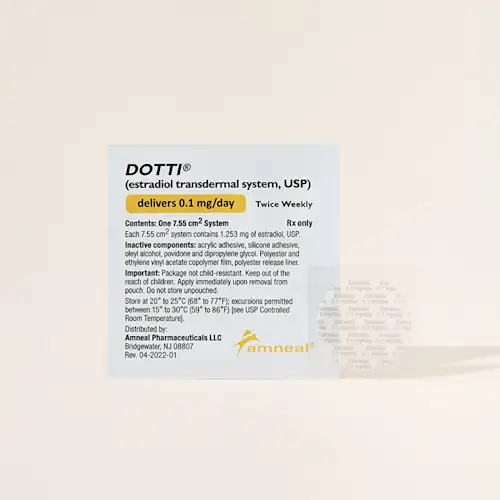
Estradiol Patch
$100 /mo
Contrary to the myth that women just have to “deal with menopause,” there are many ways you can reduce or eliminate menopause symptoms. You can take the first step by filling out our online assessment.
Frequently Asked Questions How can I tell the difference between a hot flash and a panic attack?
The biggest clue is your emotional state. While both cause sweating and a racing heart, a panic attack is almost always accompanied by an overwhelming sense of impending doom or a feeling that you are in physical danger. In contrast, a hot flash is primarily a physical sensation of intense heat. Additionally, hot flashes typically start in the face, neck, or chest, whereas anxiety-related sweating often targets the palms and underarms.
Why does the body produce different types of sweat during stress?
Your body has two types of sweat glands. "Regular" sweat comes from eccrine glands and is mostly water and salt designed to cool you down. However, when the "fight-or-flight" response is triggered by anxiety, the apocrine glands produce "stress sweat." This type of sweat contains fatty acids and proteins, making it thicker and less likely to evaporate quickly than the sweat produced during a standard hot flash.
Can anxiety make menopausal hot flashes worse?
Yes. Research suggests that women prone to anxiety symptoms may experience more frequent or severe hot flashes during perimenopause. Furthermore, the hypothalamus—your brain's "thermostat"—is responsible for both temperature regulation and the stress response. Because hormonal fluctuations make this thermostat extra sensitive, being caught off-guard by a hot flash can trigger anxiety, creating a cycle where the two symptoms reinforce each other.
Sources:
"Hot Flashes". Breastcancer.org. https://www.breastcancer.org/treatment/side_effects/hot_flashes
Freeman, Ellen W, and Mary D Sammel. “Anxiety as a risk factor for menopausal hot flashes: evidence from the Penn Ovarian Aging cohort.” Menopause (New York, N.Y.) vol. 23,9 (2016): 942-9. doi:10.1097/GME.0000000000000662
"Introduction to Menopause". Johns Hopkins Medicine. https://www.hopkinsmedicine.org/health/conditions-and-diseases/introduction-to-menopause#:~:text=Hot%20flashes%20or%20flushes%20are,for%202%20years%20or%20less
"What Causes Hot Flashes?". Breastcancer.org. https://www.breastcancer.org/tips/menopausal/treat/hot-flashes/causes
Freedman, Robert R. “Menopausal hot flashes: mechanisms, endocrinology, treatment.” The Journal of steroid biochemistry and molecular biology vol. 142 (2014): 115-20. doi:10.1016/j.jsbmb.2013.08.010
"Why do people sweat when they are nervous?". The Pennsylvania State University. https://sites.psu.edu/siowfa16/2016/10/20/why-do-people-sweat-when-they-are-nervous/
"The Science of Anxiety (Infographic)". Northwester Medicine. Jun 2020. https://www.nm.org/healthbeat/healthy-tips/emotional-health/the-science-of-anxiety
"The difference between regular sweat and stress sweat". Piedmont. https://www.piedmont.org/living-better/the-difference-between-regular-sweat-and-stress-sweat
"Anxiety Disorders". National Institute of Mental Health. https://www.nimh.nih.gov/health/topics/anxiety-disorders
"Did I just have a hot flash? I'm 44!". Johns Hopkins Medicine. https://www.hopkinsmedicine.org/health/wellness-and-prevention/did-i-just-have-a-hot-flash-im-44#:~:text=Hot%20flashes%20%E2%80%94%20those%20sudden%20surges,menopause%20years)%20than%20during%20menopause
"Panic disorder". Medline Plus. https://medlineplus.gov/ency/article/000924.htm#:~:text=Panic%20disorder%20is%20twice%20as,diagnosed%20until%20they%20are%20older
"Hot flashes - symptoms and causes". Mayo Clinic. https://www.mayoclinic.org/diseases-conditions/hot-flashes/symptoms-causes/syc-20352790#:~:text=A%20hot%20flash%20is%20the,as%20if%20you're%20blushing
Katie McCallum. "Night Sweats: 7 Reasons You May Be Sweating at Night". Houston Methodist. https://www.houstonmethodist.org/blog/articles/2020/feb/night-sweats-7-reasons-you-may-be-sweating-at-night/
"Panic attacks and panic disorder". Mayo Clinic. https://www.mayoclinic.org/diseases-conditions/panic-attacks/symptoms-causes/syc-20376021
" Self-Help CBT and the Management of Perimenopausal Symptoms in Working Women". MGH Center for Woman's Mental Health. https://womensmentalhealth.org/posts/cbt-management-perimenopausal-symptoms/
Related Content
Citations
Freeman, Sammel. ANXIETY AS A RISK FACTOR FOR MENOPAUSAL HOT FLASHES: EVIDENCE FROM THE PENN OVARIAN AGING COHORT. Menopause (New York, N.Y.) 2016;23(9):942-949. doi:10.1097/GME.0000000000000662. PMC:PMC4993654.
View sourceFreedman. MENOPAUSAL HOT FLASHES: MECHANISMS, ENDOCRINOLOGY, TREATMENT. The Journal of steroid biochemistry and molecular biology 2013;142:115-120. doi:10.1016/j.jsbmb.2013.08.010. PMC:PMC4612529.
View sourceNational Institute of Mental Health. Anxiety Disorders.
View source
Subscribe
Go ahead, you deserve to
feel fantastic
By subscribing you agree to our Terms of Service & Privacy Policy.