GLP-1 Pills (WeGovy) vs Injections : Trade Offs and Benefits
8 minute read

Summary
GLP-1 medications, available as both pills and injections, offer effective options for weight management in perimenopausal and menopausal women. Hormonal changes during midlife can make weight loss more challenging, but GLP-1 therapies help regulate appetite, improve metabolic health, and reduce stubborn fat. Understanding the differences between oral and injectable forms, their benefits, trade-offs, and safety considerations is essential for making informed choices. Integrating GLP-1 medications with lifestyle changes and, when appropriate, menopausal hormone therapy can further enhance outcomes for midlife women.
There’s little debate about GLP-1 receptor agonists’ ability to give your metabolism some support. For women in the throes of perimenopause, that matters because hormonal shifts can make weight and fat loss far more difficult.
As estrogen levels fluctuate before eventually bottoming out in menopause, your body often becomes more prone to storing fat, especially around your belly. Add in sleep disruption, stress, and the general chaos of midlife, and the traditional approach of eating less and exercising more doesn’t seem to produce the same results it once did.
This is where GLP-1 medications may help you. These prescription drugs can quell false hunger pangs, improve metabolic function, and support sustainable weight loss. They’re not a shortcut, and they’re definitely not right for everyone, but they can be a powerful tool for women who feel like they’ve been doing “all the right things” without seeing any progress.
There are two ways you can take these drugs. Ahead, learn the key differences between GLP-1 pills vs injections, and how menopause hormone therapy (MHT) may complement these medications while also helping manage menopause symptoms.
Why Weight Management Is So Challenging During Menopause
Several factors make weight management harder during menopause, but the common thread tying them together is declining estrogen levels.
Estrogen wears many hats in the body. It helps regulate appetite, fat distribution, and how efficiently your body uses insulin (an important hormone that helps regulate blood sugar in your body). When estrogen fluctuates and declines, many women notice weight gain, fat depositing around their abdomen (colloquially called, “meno belly”), and larger spikes and dips in blood glucose (sugar), even if their diet and exercise patterns haven’t changed.
These hormonal changes can also increase visceral fat, a metabolically active type of fat that wraps around your organs and is linked to cardiometabolic conditions like cardiovascular disease and type 2 diabetes.
At the same time, muscle mass naturally declines with age, and this loss can accelerate during the menopausal transition. Muscle plays a key role in metabolism: the more muscle you have, the more energy your body burns at rest. (Maybe you’ve heard the phrase “muscle burns more calories than fat.”)
Muscle also helps regulate blood sugar. Think of it as a sponge for glucose, pulling it out of your bloodstream and into muscles and organs to use for energy. When muscle mass decreases, metabolism slows, and blood sugar regulation can become less efficient, which may contribute to cravings, fatigue, and energy crashes.
With all of these hormonal shifts happening at once, it’s no surprise that weight management often requires more support than diet and exercise alone.
How GLP-1 Medications Work: The Science Behind Weight Loss in Midlife
GLP-1 (glucagon-like peptide-1) receptor agonists mimic that same gut hormone involved in appetite regulation and blood sugar control. These drugs help quell that incessant “food noise” that can make you feel like you’re hungry, even when you’re not. They do this by increasing satiety and slowing gastric emptying (meaning food leaves your stomach more slowly). GLP-1 RAs can help improve insulin sensitivity and post-meal glucose control
For many women, the biggest shift is that eating starts to feel calmer. Cravings can fade. Portions naturally shrink. And the mental load of erratic hunger often eases, which can make lifestyle changes easier to sustain.
Evidence specific to peri- and postmenopausal women is still evolving, but a 2025 review notes GLP-1 receptor agonists are among the most effective pharmacologic options for weight loss. The findings also suggest these drugs can be a valuable tool in peri- and postmenopausal care, though more research is needed.
GLP-1 Pills vs Injections: What’s the Difference?
Until very recently, most people heard of GLP-1 receptor agonists and thought: needles. But that changed in December 2025 when the U.S. Food and Drug Administration (FDA) approved an oral form of Wegovy (semaglutide) for adults.

Wegovy® Pen
Starting at $199 $499
Here’s how the pills compare with the injections:
“No needles” doesn’t necessarily make this option easier
Injectable Wegovy is taken once a week and at any time of day, with or without meals. Wegovy tablets, on the other hand, are taken once-daily, but they come with some precise rules: they must be taken in the morning on an empty stomach with water only (up to about four ounces), and you need to wait at least 30 minutes before eating, drinking anything else, or taking with other oral medications. This waiting period helps your body absorb the medication effectively, because food, drinks, and other medications can reduce how much of the drug enters your bloodstream.
If you’re someone who wakes up ravenous, takes thyroid medications every morning, or genuinely looks forward to that cup of coffee first thing, the pill version may not be the best option for you.
Dose escalation and digestive side effects are similar for both
Both oral and injectable GLP-1 medications are designed to start at a low dose and gradually increase over time. This approach, known as dose escalation, helps your body adjust to the medication so it tolerates the drug better.
With injectable Wegovy, the dose typically increases over several weeks until reaching a maintenance dose, which for many is about 2.4 milligrams (mg) once weekly. The tablet version follows a similar approach, starting with a low daily dose before gradually increasing to a maintenance dose of 25 mg per day.
Side effects are generally similar across GLP-1 medications, regardless of the form you take them in. The most common include nausea, constipation, diarrhea, reflux, and reduced appetite. You’re more likely to notice these symptoms during dose increase phases, but for many, they improve as the body adjusts. Slowing dose escalation, staying well hydrated, prioritizing protein during meals and snacks, and eating smaller meals can all help ease these side effects.
Efficacy appears to be equivalent between the two
For now, injectable GLP-1 medications have the most research behind them, simply because they’ve been available and studied longer. But oral Wegovy was designed to offer a comparable option for those who don’t feel comfortable giving themselves weekly injections.

Wegovy® Pill
Starting at $149
Think about it this way: the most effective medication is the one you can use safely and stay consistent with over time.
Benefits and Trade-Offs: Choosing the Right GLP-1 Option for You
Choosing between GLP-1 pills and injections often comes down to your lifestyle habits and personal preferences. If you’re someone who prefers less maintenance, the injection may be a better fit for you. If you already have a strong morning routine, a daily pill might fit into that seamlessly.
Apart from routine, cost is another major consideration. The pills are often cheaper if you’re paying out of pocket. But if your insurance covers it, both options will likely be similar in price.
When in doubt, partnering with a menopause-informed clinician can help you weigh these factors and decide which option fits best with your health history, weight goals, and day-to-day life.
GLP-1 Medications and Menopausal Hormone Therapy: A Powerful Combination
MHT isn’t a weight loss treatment, but it can address some of the hormonal shifts that contribute to weight gain during this life stage. By replenishing estrogen levels, MHT may help reduce meno belly while improving other classic menopause symptoms, such as hot flashes, sleep disruption, and mood changes.
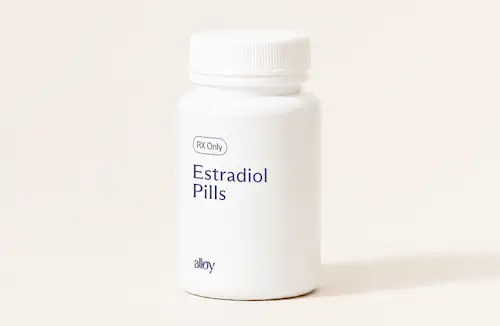
Estradiol Pill
Starting at $39.99 /mo
“Both hormone therapy and GLP-1 medications give your metabolic system a boost. When you feel better, you may find that eating well, exercising and making healthy lifestyle choices just comes easier. In turn, weight loss and improved body composition follow. Both hormone therapy and GLP-1 medications can be the support you need to return to your healthiest self when struggling with peri- and menopausal changes.”
Emerging research suggests pairing MHT with GLP-1 medications may enhance metabolic outcomes. A 2024 cohort study published in the journal Menopause found that postmenopausal women using hormone therapy lost more weight with semaglutide than those not taking MHT. While more research is needed, these findings suggest the two therapies may work in complementary ways.
Lifestyle Habits Shouldn’t Fall to the Wayside
GLP-1 receptor agonists work best when paired with sustainable lifestyle habits. Balanced nutrition, regular physical activity, and consistent sleep support weight management during the menopausal transition, while strength training and adequate protein help preserve muscle and maintain a healthy metabolism.
Safety, Side Effects, and Special Considerations for Menopausal Women
GLP-1 receptor agonists are generally considered safe when prescribed and monitored by a qualified healthcare provider. The most common side effects are digestive, including nausea, constipation, diarrhea, and reduced appetite. But keep in mind that these symptoms often appear when the dose increases and often improve as your body adjusts to the medication.

Compounded Semaglutide
Starting at $70
That said, GLP-1s don’t work for everyone, and that’s okay. People with a history of certain conditions, such as medullary thyroid cancer or pancreatitis, may need to avoid them to avoid adverse health events.
While GLP-1s don’t usually interfere with the absorption of other oral medications you may be taking, it's always a good idea to check in with your doctor to make sure.
What to Ask Your Provider Before Starting GLP-1 Therapy
Before starting any new medication, it’s important to discuss whether it’s the right fit for you. Talk with a menopause-informed clinician about your stage of menopause, medical history, and weight management goals. You can also ask whether a pill or injectable option better suits your lifestyle, what side effects to expect, and how the medication will be monitored over time.
It’s also worth discussing how GLP-1 therapy might fit alongside other menopause treatments, such as hormone therapy, as well as practical considerations like insurance coverage, cost, and long-term support. Remember: you are your own advocate, and asking thoughtful questions can help ensure your treatment plan aligns with your health needs and goals.
Frequently Asked Questions
Why does weight loss become more difficult during perimenopause and menopause?
Weight management becomes challenging primarily due to declining estrogen levels, which change how the body stores fat and processes insulin. This hormonal shift often leads to "meno belly," or increased visceral fat around the abdomen, even without changes to diet or exercise. Furthermore, the natural loss of muscle mass during this transition slows the metabolism, as muscle is more efficient at burning energy and regulating blood sugar than fat.
What are the primary differences between GLP-1 pills and injections?
The main differences lie in the administration schedule and daily requirements. Injectable semaglutide is typically taken once a week and can be administered at any time of day with or without food. In contrast, the oral version is a daily pill that must be taken on an empty stomach with no more than four ounces of plain water, followed by a 30-minute wait before eating, drinking, or taking other medications. While the delivery method differs, both options require gradual dose escalation and show equivalent efficacy in clinical research.
Can I use menopause hormone therapy (MHT) alongside GLP-1 medications?
Yes, MHT and GLP-1 medications can be a powerful combination for metabolic health. While MHT is not a weight-loss drug, it replenishes estrogen to help redistribute fat and manage symptoms like poor sleep and mood changes. Emerging research, including a 2024 study, suggests that postmenopausal women using hormone therapy may actually lose more weight on GLP-1 medications than those not using MHT, as the two treatments work in complementary ways to support the metabolic system.
Related Content
Citations
Hana Mikdachi, Rebecca Dunsmoor-Su. GLP-1 receptor agonists for weight loss for perimenopausal and postmenopausal women: current evidence. Curr Opin Obstet Gynecol 2025;37(2):97-101. PMID:39970049.
View sourceJoana Nicolau, Jorge Blanco-Anesto, Aina Bonet, Juan José Félix-Jaume, Apolonia Gil-Palmer. Effectiveness of Low Doses of Semaglutide on Weight Loss and Body Composition Among Women in Their Menopause. Metab Syndr Relat Disord 2025;23(1):70-76. PMID:39761057.
View sourceMaria D Hurtado, Elif Tama, Sima Fansa, Wissam Ghusn, Diego Anazco, Andres Acosta, et al.. Weight loss response to semaglutide in postmenopausal women with and without hormone therapy use. Menopause 2024;31(4):266-274. PMID:38446869.
View sourceSantiago Palacios, Peter Chedraui, Rafael Sanchez-Borrego, Pluvio Coronado, Tommaso Simoncini, Katrin Schauding, et al.. Management of obesity in menopause. Climacteric 2024;27(4):357-363. PMID:39016333.
View sourceManeeha Naveed, Cecilie Perez, Ehtasham Ahmad, Laura Russell, Zoe Lees, Catriona Maybury. GLP-1 medication and weight loss: Barriers and motivators among 1659 participants managed in a virtual setting. Diabetes Obes Metab 2025;27(7):3780-3788. PMID:40259493.
View sourceChristoph Kapitza, Leszek Nosek, Lene Jensen, Helle Hartvig, Christine B Jensen, Anne Flint. Semaglutide, a once-weekly human GLP-1 analog, does not reduce the bioavailability of the combined oral contraceptive, ethinylestradiol/levonorgestrel. J Clin Pharmacol 2015;55(5):497-504. PMID:25475122.
View source
Subscribe
Go ahead, you deserve to
feel fantastic
By subscribing you agree to our Terms of Service & Privacy Policy.