Do GLP-1 Patches Work? A Clinician-Led Take
7 minute read

Summary
GLP‑1 medications are widely used to support weight loss and metabolic health, but a growing number of products marketed as “GLP‑1 patches” claim to deliver similar benefits without injections. Many of these patches do not contain clinically proven GLP‑1 medications and may rely on supplements or peptides with little evidence for weight loss. Understanding how GLP‑1 therapies actually work, how medications are delivered in the body, and how midlife hormonal changes affect metabolism can help women evaluate these claims and make safer, evidence‑based decisions.
GLP-1 patches are having a moment on social media.
These small adhesive patches promise appetite control, weight loss, and “GLP-1 support,” all without a prescription or a needle. It’s easy to see the appeal, especially if you’re dealing with weight gain during perimenopause or menopause.
But the truth is, these products are unregulated, and at this point, there’s no supporting research about their ability to help you lose weight.
Why GLP‑1 Patches Are Suddenly Everywhere
Some transdermal medications are effective. Hormone therapy patches, for example, are widely used and clinically proven when prescribed by a qualified, menopause-informed provider.
But not every medication translates to a patch, and GLP-1 therapies fall into that category (at least, that’s the case for now).
Still, these products are appealing for a few reasons. They’re available over the counter, often more affordable, and don’t require a prescription. They’re also needle-free, which can feel like a major plus if injections aren’t your thing.
These patches are often positioned as natural, hormone-supportive, and metabolism-boosting. Some even suggest they mimic or enhance GLP-1 activity. But here’s the thing: These patches don’t contain any glucagon-like peptide-1 (GLP-1) medication.
So while they’re framed as a simpler, more approachable alternative to prescription GLP-1 therapies, they’re not a one-to-one at all. Frankly, they’re likely a waste of your money.
“Right now, we simply don’t have clinical evidence showing these patches deliver anything close to what prescription GLP-1 medications can do. When something sounds like a shortcut to a proven treatment, it’s probably worth taking a step back and looking at the data a little more closely.” - Dr. Judith Barreiro
The Power of GLP-1 Medications During Midlife
As estrogen levels shift during perimenopause, ping-ponging up and down on any given notice, your body starts to behave differently. You might notice more weight accumulating around your midsection (often referred to as menopause or “meno” belly), even if your diet and exercise routine haven’t changed.
GLP-1 receptor agonists can help you get the number on the scale down by mimicking the hormone glucagon-like peptide-1, which your body naturally produces. This hormone plays a key role in regulating your appetite, blood sugar, and digestion.
These medications can help reduce hunger, keep you feeling full longer (by slowing how quickly food leaves your stomach), and improve how your body responds to insulin.
Of course, GLP-1s aren’t one-size-fits-all. They’re typically prescribed after a clinician evaluates your health history, symptoms, and goals. For some women, they can be incredibly helpful. For others, they may not be the right fit, and that’s okay.
Why GLP-1 Medications Are Usually Injections
GLP-1 medications are not simple compounds. They’re large peptide molecules, which makes them difficult for your body to absorb. When it comes to the skin, it acts as a barrier, not a doorway.
That’s why most FDA-approved GLP-1 medications are delivered by injection, which allows the medication to reach the bloodstream almost immediately. Though oral Wegovy has been shown to help support modest weight loss.
There’s ongoing research into alternative delivery methods, including transdermal (patch-based) options. But so far, most of that research has been limited to studies including mice.
In other words, GLP-1 medications are not currently FDA-approved in patch form, and they’re not available as clinically validated transdermal treatments.
Which brings us to what’s actually being sold, which often violates FDA regulations.
What’s Inside Most “GLP-1 Patches”
Again, most patches marketed across various social media channels don’t actually contain GLP-1 medications, like semaglutide or tirzepatide.
Instead, they’re typically made up of ingredients you’d find in over-the-counter supplements, including herbal extracts, vitamins (often B12), caffeine, or amino acids.
Some products claim to “support GLP-1 production” or “boost metabolism,” but experts advise that these ingredients do not have the same effect as a proper GLP-1 medication.
“There are a lot of products using catchy buzzwords, but the ingredients in these patches simply don’t act like GLP-1 medications in the body.”
Sure, some of these ingredients may have mild effects on energy or appetite, but they haven’t been shown to produce the kind of weight loss seen with prescription GLP-1 therapies.
There’s also the question of dosing.
It’s not always clear how much of which ingredient you’re getting, how reliably it’s absorbed through the skin, or whether it’s delivered in a way your body can actually use.
So while the packaging may look similar to a medical treatment, what’s inside (and how it works!) is wildly different.
Potential Safety and Regulatory Concerns
Prescription GLP-1 medications are FDA-approved, which means they’ve been clinically evaluated for safety, quality, and effectiveness. This means you get the same dose every time and your treatment is guided by a clinician who can monitor how you respond to it over time.
Most weight-loss patches are sold as supplements, which aren’t regulated by the FDA. That doesn’t necessarily mean that every product is unsafe, but it does mean there’s less clarity around what’s actually in them, how consistent the dosing is, and whether the claims are supported by strong clinical evidence.
What Actually Works for Midlife Weight Care
As of right now, dupe GLP-1 patches aren’t a reliable way to lose weight, but it’s far from your only option.
For most women, weight changes in midlife aren’t caused by just one thing, and they’re rarely solved by one thing either.
A more effective approach zooms out and looks at the full picture, which can include making targeted adjustments to your nutrition and exercise routine (like prioritizing resistance training to maintain muscle), while also supporting sleep quality and managing stress.
FDA-approved GLP-1 medications, which Alloy offers, can be part of that plan, particularly if lifestyle changes alone aren’t getting you where you want to be. They’re by no means a standalone fix, but they work when paired alongside other healthy lifestyle habits. They can also work synergistically with Hormone Replacement Therapy (HRT).
Where Hormones Fit Into the Midlife Weight Picture
Sometimes the key to balancing the number on the scale is to first balance your hormones. As estrogen levels decline, your body becomes more likely to store fat around your belly. As a result, your insulin sensitivity can go haywire, and your muscle mass may gradually start to decline.
At the same time, symptoms such as poor sleep, hot flashes, and fatigue can make it harder to stay consistent with your gym-going routine or prepping healthy meals.
For many women, HRT can be the ticket to improving those underlying symptoms, which can make everything else feel more manageable. There’s also emerging research suggesting that, for some women, combining hormone therapy with GLP-1 medications may enhance results.
One study from February 2026 found that postmenopausal women using hormone therapy and tirzepatide lost about 35% more weight than those using the GLP-1 medication alone. (That said, this was an observational study, meaning it shows an association, not cause and effect.)
Not everyone is a candidate for systemic HRT, and that’s completely fine. In those cases, lower-dose or localized options, like creams, gels, or transdermal patches, may be worth discussing with a menopause-trained provider.
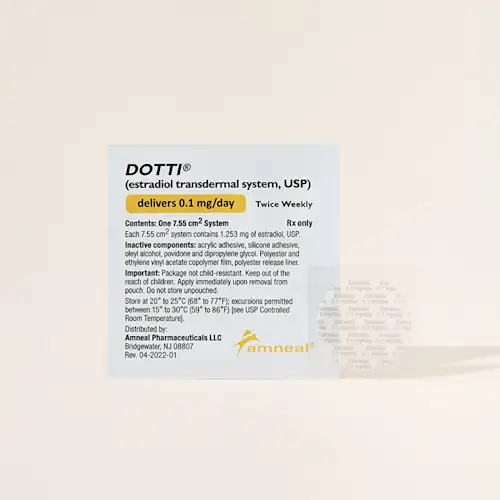
Estradiol Patch
$100 /mo
And for women who can’t or choose not to use hormone therapy at all, GLP-1 medications on their own can still be an effective option.
How to Evaluate Weight-Loss Claims Online
With so many products out there, it can be difficult to sift through the noise, especially if you’re eager for a solution. You can be your own detective and scope out which products are FDA-regulated or not. Consider asking yourself these key questions:
Does it contain an FDA-approved medication, or just supplements?
Are the claims backed by clinical research, or mostly testimonials?
Does it promise results without any lifestyle changes?
Is a healthcare professional involved at any point?
This isn’t to say you should avoid all supplements and over-the-counter options, but it does require you to do your research. Always consult with your care team before starting any new product to confirm there are no potential contraindications with current medications you may be taking.
Remember, there are plenty of options out there for you. But knowing what to look for makes it easier to separate what’s evidence-based from what’s just good marketing.
Frequently Asked Questions
Are GLP-1 weight-loss patches FDA-approved or clinically proven?
No. Currently, there are no transdermal GLP-1 patches approved by the FDA for weight loss or diabetes. While research into patch-based delivery is ongoing, it has largely been limited to animal studies. Most "GLP-1 patches" sold online are marketed as supplements, meaning they are not regulated for safety or effectiveness and do not contain prescription-strength semaglutide or tirzepatide.
Why are prescription GLP-1 medications typically given as injections instead of patches?
GLP-1 medications are large, complex peptide molecules that are difficult for the body to absorb through the skin's natural barrier.Injections allow the medication to enter the bloodstream immediately to effectively mimic the hormones that regulate hunger and digestion. While a pill version of semaglutide exists, the technology to deliver these specific large molecules through a standard skin patch has not yet been successfully developed for human use.
Can combining hormone therapy (HRT) with GLP-1 medications improve weight loss results?
Recent research suggests a promising synergy between the two.A February 2026 study found that postmenopausal women using both hormone therapy and tirzepatide lost approximately 35% more weight than those using the GLP-1 medication alone.This may be because HRT stabilizes the hormonal fluctuations that lead to fat storage and fatigue, making it easier to maintain the lifestyle habits that support long-term weight management.
Related Content
https://www.myalloy.com/blog/why-glp-1s-and-mht-are-a-beneficial-combination
https://www.myalloy.com/blog/why-glp-1s-and-mht-are-a-beneficial-combination
https://www.myalloy.com/blog/midlife-weight-gain-why-is-it-so-hard-to-lose
https://www.myalloy.com/blog/healthy-habits-boost-weight-loss
https://www.myalloy.com/blog/why-youre-gaining-weight-in-midlife-and-what-actually-works
https://myalloy.zendesk.com/hc/en-us/articles/29985630231443-Do-I-need-a-mammogram
https://myalloy.zendesk.com/hc/en-us/articles/25740406062227-Are-your-products-bioidentical
Citations
Hana Mikdachi, Rebecca Dunsmoor-Su. GLP-1 receptor agonists for weight loss for perimenopausal and postmenopausal women: current evidence. Curr Opin Obstet Gynecol 2025;37(2):97-101. PMID:39970049.
View sourceChristoph Kapitza, Leszek Nosek, Lene Jensen, Helle Hartvig, Christine B Jensen, Anne Flint. Semaglutide, a once-weekly human GLP-1 analog, does not reduce the bioavailability of the combined oral contraceptive, ethinylestradiol/levonorgestrel. J Clin Pharmacol 2015;55(5):497-504. PMID:25475122.
View sourceMaria D Hurtado, Elif Tama, Sima Fansa, Wissam Ghusn, Diego Anazco, Andres Acosta, et al.. Weight loss response to semaglutide in postmenopausal women with and without hormone therapy use. Menopause 2024;31(4):266-274. PMID:38446869.
View sourceSantiago Palacios, Peter Chedraui, Rafael Sanchez-Borrego, Pluvio Coronado, Tommaso Simoncini, Katrin Schauding, et al.. Management of obesity in menopause. Climacteric 2024;27(4):357-363. PMID:39016333.
View sourceSantiago Palacios, Peter Chedraui, Rafael Sánchez-Borrego, Pluvio Coronado, Rossella E Nappi. Obesity and menopause. Gynecol Endocrinol 2024;40(1):2312885. PMID:38343134.
View source
Subscribe
Go ahead, you deserve to
feel fantastic
By subscribing you agree to our Terms of Service & Privacy Policy.