Oral vs. Transdermal Estrogen: Which HRT Form Is Right for You?
8 minute read
Summary
Hormone replacement therapy can deliver estrogen through oral pills or through the skin using patches, gels, or sprays. The route of administration affects how the hormone moves through the body, particularly whether it passes through the liver before entering circulation. These differences influence clotting factors, metabolic effects, and safety considerations, even though both routes can effectively relieve menopause symptoms. Choosing the right option depends on individual health history, risk factors, and treatment goals.
Why the Way You Take Estrogen Matters
Hormone replacement therapy (HRT) comes in many forms and types. So there are a few different decisions you’ll need to make, including whether or not to take it in the first place, and from there, deciding how you want to take it.
Two of the most common forms of systemic HRT are oral estrogen (taken as a pill) and transdermal estrogen, which is delivered through the skin via patches, gels, sprays or vaginal rings. "Systemic" means the hormone enters the bloodstream and circulates throughout the body to help manage menopause symptoms throughout your body, from hot flashes to vaginal discomfort and mood swings.
While both oral and transdermal estradiol HRT can be highly effective, they aren't processed by the body in exactly the same way. The route that estrogen is absorbed into the bloodstream influences how it interacts with organs like the liver and can affect things like blood clotting risk, cholesterol levels, and other metabolic processes.
These differences can also influence convenience, side effects, and which option may be the best fit for a particular person.
That's why understanding the distinctions between oral and transdermal estrogen can be helpful when weighing your options. Ahead, we'll compare oral vs. transdermal options for HRT and go over the factors clinicians consider when recommending one approach over another.
How Oral Estrogen Is Processed in the Body
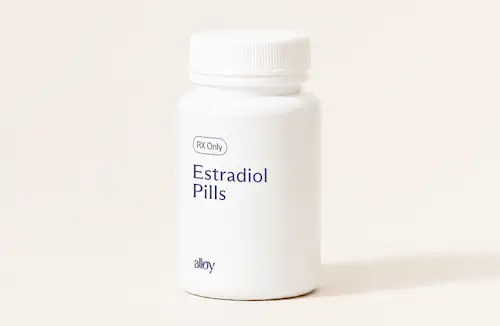
Oral estrogen is taken as a daily pill. So after you swallow it, the medication passes through the digestive system and then the liver before it goes into the bloodstream.
Estradiol Pill
Starting at $39.99 /mo
You may read about this process or hear healthcare providers refer to it as first-pass hepatic metabolism or first-pass in the liver. While it sounds technical, it just describes the fact that the liver processes the medication before it circulates throughout the rest of the body.
First-pass of the liver is an important step because, as the liver metabolizes estrogen, it also responds by producing certain proteins and clotting factors. This can influence a variety of metabolic processes and gallbladder disease. These are reasons oral estrogen carries a slightly different risk profile than other forms of hormone therapy.
In many ways, this liver-processing step is the biggest distinction between oral and transdermal estrogen. While both can effectively deliver estrogen throughout the body, that difference helps explain some of the benefits and risks we'll discuss next.
How Transdermal Estrogen Bypasses the Liver
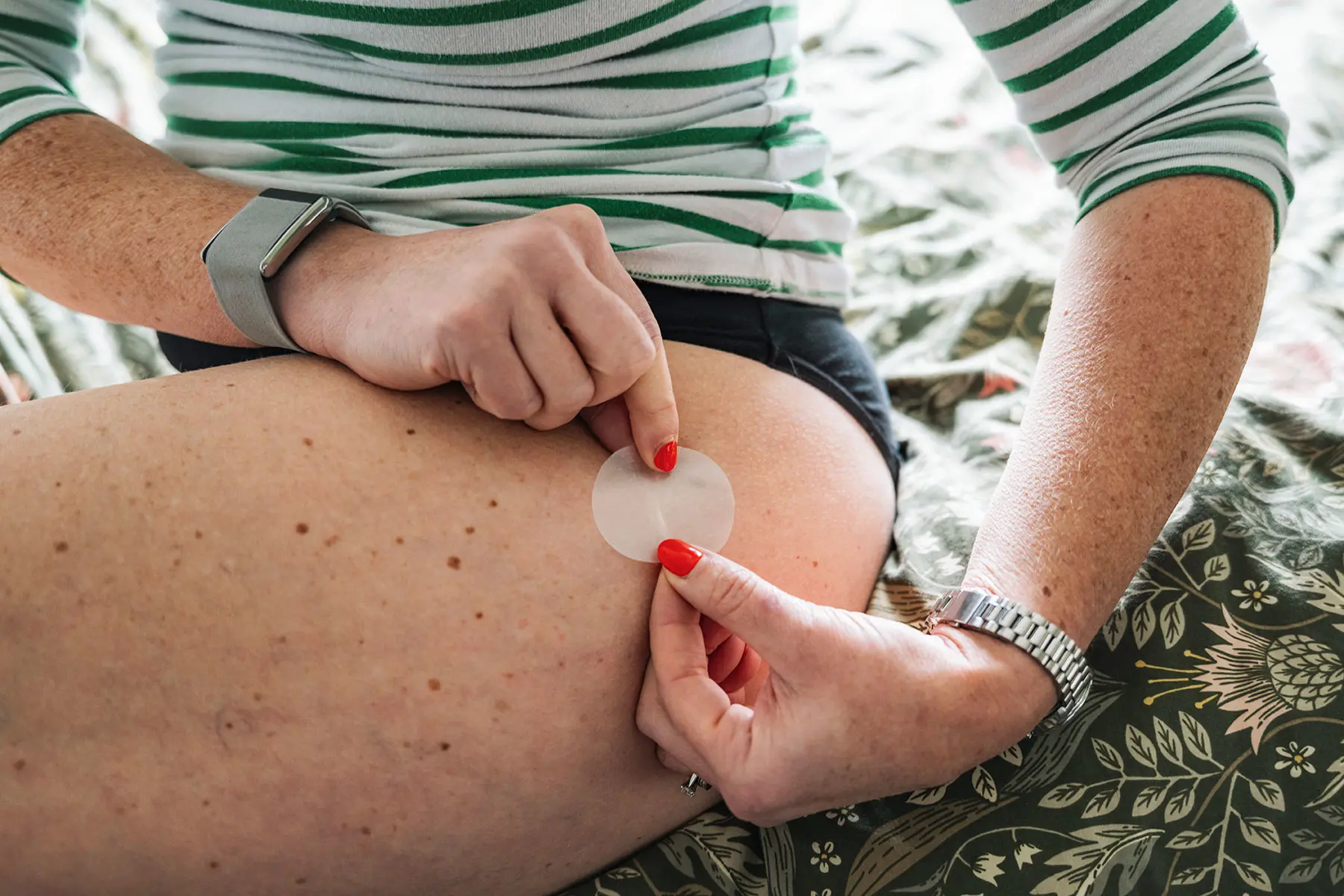
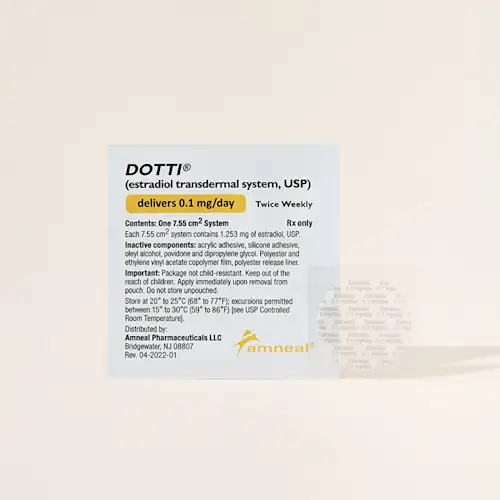
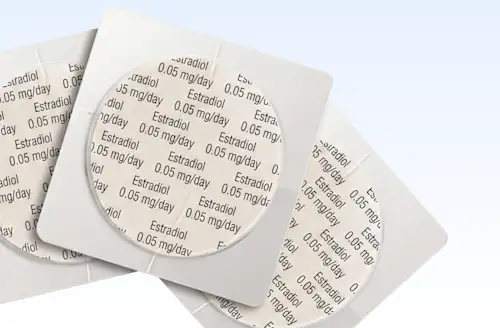
Transdermal estrogen is delivered through the skin and absorbed directly into the bloodstream. This is what we mean when we say it bypasses the liver’s first-pass metabolism. As a result, transdermal estrogen avoids many of the liver-related effects associated with oral therapy and may provide more stable hormone levels over time.
Transdermal hormone therapy comes in a few forms, including but not limited to:
Estradiol Patch
$100 /mo
Transdermal patch
Topical gel
Topical spray
We’ll touch on this more later, but it’s worth calling out that some of these medications also combine both estrogen and progestin, which may be recommended for women who still have a uterus to help protect the uterine lining.
Like oral estrogen, all of the above transdermal options provide systemic hormone therapy and can help manage whole-body menopause symptoms such as hot flashes, night sweats, and sleep disruption.
So, the main difference is the route the hormone takes to get there and how convenient it is to use.
Patch Shortage? Not at Alloy.
What Research Shows About Blood Clot Risk
More serious—but still uncommon—risks of HRT can include:
Venous thromboembolism (i.e., blood clots in the legs or lungs)
Stroke
Influence on certain cancers
Because the hormone bypasses your liver with transdermal HRT, they’re often a better option for those who have a sensitive stomach or a higher risk of blood clots. Indeed, research shows that patches are associated with a lower risk of gallbladder disease and fewer blood clots compared to oral estrogen.
This is especially relevant for women with existing clotting risk factors or certain underlying health conditions, like obesity, hypertension, diabetes and history of a provoked blood clot.
But, to keep things in perspective, the overall risk of blood clots is relatively low with any method of treatment for healthy women starting therapy near menopause (which means before 60 years old or within ten years of menopause).
Do Patches, Gels, Sprays and Pills Work Equally Well for Symptoms?
The immediate answer is yes.
Both oral and transdermal hormone therapy are considered highly effective treatments for menopause symptoms. Because they're systemic forms of HRT, they circulate throughout the body and can help manage symptoms such as hot flashes, night sweats, sleep disruption, and vaginal discomfort.
They work by replacing the estrogen that the ovaries are no longer consistently producing. In doing so, they can help improve sleep, mood symptoms, and vaginal discomfort. As hormone levels stabilize, many women notice improvements in symptoms and overall quality of life.

Estradiol Vaginal Cream
$119.97
One distinction worth pointing out is that there’s some research showing that patches, in particular, may improve sexual function more than estrogen pills.
While the timeline varies for HRT, most women start noticing improvements within a couple of weeks and with continued improvement over the following 2-3 months of starting HRT.
The route you end up taking will depend on the safety profile, convenience, and personal preference. In other words, the decision doesn’t usually but doesn’t always revolve around effectiveness.
Who Might Benefit Most from Transdermal Estrogen?
Transdermal estrogen may be a particularly good fit for women who:
Have risk factors for blood clots or cardiovascular disease, such as obesity, hypertension, diabetes, or certain inherited clotting disorders
Prefer to avoid first-pass metabolism through the liver
Have difficulty or sensitivities with oral medications
Don't want to take a daily pill
Prefer a delivery method that provides relatively steady hormone levels
Beyond these medical considerations, day-to-day convenience also plays a role in who prefers what. Here’s an overview of how each form of HRT is used:
Patches. These are applied to a hair-free area, usually on the lower abdomen or upper buttocks. Depending on the product, they’re typically changed once or twice a week. And, good news: they’re designed to stay on during showers, swimming, and most daily activities
Sprays. These are applied to clean, dry skin once daily, usually on the arms, shoulders, or thighs. They’re typically used around the same time each day.
Gels. Topical gels are also applied to clean, dry skin once daily. They’re usually spread onto the arms, shoulders, or thighs and allowed to dry before dressing
Pills. Oral pills are taken by mouth once daily, ideally at the same time each day.
Ultimately, getting personalized care from a physician who specializes in menopause is the best approach. They’ll help you weigh all the factors and find an approach that fits your life.
Other Factors to Discuss with Your Clinician
A few practical and medical considerations can help you and your provider figure out if. Oral or transdermal HRT is better for you.
Here are some topics worth discussing with your clinician:
Your health history. Be sure to review any personal or family history of blood clots, cardiovascular disease, migraines (and yes..even if you have migraines, you are a candidate for treatment with HRT), liver disease, or other factors that could influence what your provider recommends.
Whether you still have a uterus. Women with a uterus are typically prescribed progesterone alongside estrogen to help protect the uterine lining. Your provider can guide you as to how this would fit into your treatment plan.
Lifestyle. Some women prefer the simplicity of a daily pill, while others prefer not having to remember a medication every day. This point in the conversation is also a good time to ask about insurance coverage, cost, and availability.
Monitoring and any follow-up care. HRT treatment doesn’t have to be an isolating, one-and-done appointment. Ask what type of follow-up is recommended and whether routine screenings, such as mammograms, should be part of your ongoing care plan. You can also ask if they provide ongoing lifestyle guidance or anything of that sort.
Keep in mind that the goal isn't necessarily to find the "best" form of hormone therapy. It's to find the option that best aligns with your symptoms, medical history, preferences, and long-term goals.
If you’d like to connect with a provider who specializes in menopause care to learn more about your HRT options, you can start by filling out this form.
Frequently Asked Questions
What is the main difference in how the body processes oral versus transdermal estrogen?
Oral estrogen is swallowed as a daily pill that passes through the digestive system and the liver before entering the bloodstream, which is known as first-pass hepatic metabolism. Transdermal estrogen is applied to the skin as a patch, gel, or spray and is absorbed directly into the bloodstream, completely bypassing the liver's first-pass metabolism and providing more stable hormone levels.
Are transdermal estrogen options like patches, gels, and sprays as effective as oral pills for treating menopause symptoms?
Yes, both oral and transdermal methods are considered highly effective systemic treatments. They work equally well to replace the estrogen the ovaries no longer produce, circulating throughout the body to improve quality of life and manage symptoms such as hot flashes, night sweats, sleep disruption, and vaginal discomfort.
Why might a clinician recommend transdermal estrogen over an oral pill?
A clinician may recommend transdermal estrogen for individuals who want to avoid a daily pill, have a sensitive stomach, or have a higher risk of blood clots and cardiovascular disease due to conditions like obesity, hypertension, diabetes, or a history of a provoked blood clot. Because transdermal estrogen bypasses the liver, research shows it is associated with a lower risk of gallbladder disease and fewer blood clots compared to oral therapy.
References
Beck KE, et al. (2017). Transdermal estrogens in the changing landscape of hormone replacement therapy. https://www.tandfonline.com/doi/10.1080/00325481.2017.1334507
Cho LE, et al. (2024). Rethinking menopausal hormone therapy: For whom, what, when and how long?. https://pmc.ncbi.nlm.nih.gov/articles/PMC10708894/
Crandall CA, et al. (2023). Management of menopausal symptoms. https://jamanetwork.com/journals/jama/article-abstract/2801054
Francois LA, et al. (2011). Does the route of administration for estrogen hormone therapy impact the risk of venous thromboembolism? Estradiol transdermal system versus oral estrogen-only hormone therapy. https://journals.lww.com/menopausejournal/abstract/2011/10000/does_the_route_of_administration_for_estrogen.6.aspx
Harper-Harrison GI, et al. (2024). Hormone replacement therapy. https://www.ncbi.nlm.nih.gov/books/NBK493191/
Liu BE, et al. (2008). Gallbladder disease and use of transdermal versus oral hormone replacement therapy in postmenopausal women: prospective cohort study. https://pmc.ncbi.nlm.nih.gov/articles/PMC2500203/
Morris GU, et al. (2022). Hormone replacement therapy in women with history of thrombosis or a thrombophilia. https://www.tandfonline.com/doi/10.1177/20533691221148036
Palacios SA, et al. (2023). Obesity and menopause. https://www.tandfonline.com/doi/10.1080/09513590.2024.2312885
Palmisano BR, et al. (2018). Estrogens in the regulation of liver lipid metabolism. https://pmc.ncbi.nlm.nih.gov/articles/PMC5763482/
Taylor HU, et al. (2017). Effects of oral vs transdermal estrogen therapy on sexual function in early postmenopause. https://jamanetwork.com/journals/jamainternalmedicine/fullarticle/2652573
The North American Menopause Society. (2022). The 2022 hormone therapy position statement of The North American Menopause Society. https://journals.lww.com/menopausejournal/abstract/2022/07000/the_2022_hormone_therapy_position_statement_of_the.4.aspx
Related Content
https://www.myalloy.com/blog/estradiol-patch-vs-pill-vs-spray-whats-right-for-me
https://www.myalloy.com/blog/signs-you-need-menopausal-hormone-therapy
https://www.myalloy.com/blog/why-does-menopause-make-sex-hurt
https://www.myalloy.com/blog/frequent-utis-and-menopause-what-can-you-do
https://www.myalloy.com/blog/bioidentical-hormone-replacement-therapy-insiders-guide
https://myalloy.zendesk.com/hc/en-us/articles/25740406062227-Are-your-products-bioidentical
https://myalloy.zendesk.com/hc/en-us/articles/30013148243219-Does-Alloy-offer-Progesterone
https://myalloy.zendesk.com/hc/en-us/articles/29985630231443-Do-I-need-a-mammogram
Citations
The 2022 hormone therapy position statement of The North American Menopause Society. Menopause 2022;29(7):767-794. PMID:35797481.
View sourceCarolyn J Crandall, Jaya M Mehta, JoAnn E Manson. Management of Menopausal Symptoms: A Review. JAMA 2023;329(5):405-420. PMID:36749328.
View sourceLeslie Cho et al. Rethinking Menopausal Hormone Therapy: For Whom, What, When, and How Long? Circulation 2023;147(7):597-610. PMID:36780393.
View sourceGuy Morris, Vikram Talaulikar. Hormone replacement therapy in women with history of thrombosis or a thrombophilia. Post Reprod Health 2023;29(1):33-41. PMID:36573625.
View sourceBrian T Palmisano, Lin Zhu, John M Stafford. Role of Estrogens in the Regulation of Liver Lipid Metabolism. Adv Exp Med Biol 2017;1043:227-256. PMID:29224098.
View sourceKeli L Beck, Michelle C Anderson, Julienne K Kirk. Transdermal estrogens in the changing landscape of hormone replacement therapy. Postgrad Med 2017;129(6):632-636. PMID:28540770.
View sourceSantiago Palacios, Peter Chedraui, Rafael Sánchez-Borrego, Pluvio Coronado, Rossella E Nappi. Obesity and menopause. Gynecol Endocrinol 2024;40(1):2312885. PMID:38343134.
View source
Subscribe
Go ahead, you deserve to
feel fantastic
By subscribing you agree to our Terms of Service & Privacy Policy.