Menopause and Dementia Risk: Can HRT Help Brain Health?
10 minute read

Summary
Dementia risk increases for women as they age, particularly during and after the menopause transition, with estrogen decline playing a key role in brain changes. Research shows that the timing, type, and formulation of hormone replacement therapy (HRT) may influence cognitive outcomes, but current evidence does not support HRT for dementia prevention in the general population. Early initiation of HRT, especially in women with premature or surgical menopause, may offer some neuroprotective benefits, while starting HRT later in life can increase risks. Shared decision-making, individualized care, and attention to lifestyle factors remain essential for supporting brain health during menopause.
Understanding Dementia Risk in Menopause
Dementia risk increases with age for everyone, but more so for women than men. In fact, about two-thirds of people living with Alzheimer’s disease are women. And while women’s longer life expectancy explains part of it, researchers also think hormonal changes, like declining estrogen during menopause, could play a role, too.
Estrogen supports the brain in many ways, including communication between brain cells, blood flow, and protecting neurons. So as hormone levels shift during perimenopause and decline during menopause, some women might also experience some changes in how their brains work.
Symptoms like trouble concentrating, forgetfulness, and mental fatigue are often lumped together under the term “brain fog.” The reassuring news is that these are pretty common during perimenopause, and they’re often passing. In most cases, they also fall within the range of normal changes rather than being a sign of dementia.
Menopause can also overlap with other factors that influence dementia risk later in life, like a family history of Alzheimer’s disease, heart disease, and lifestyle factors like poor sleep, being inactive, and not eating a nutritious diet.
But back to the connection between menopause and dementia risk: Researchers are actively studying how hormonal changes during menopause affect long-term brain health, and there’s also growing interest in whether hormone replacement therapy (HRT) can help or hurt dementia risk.
We’ll unpack all the details ahead.
What Does the Research Say About HRT and Dementia?
So far, the evidence isn’t strong enough to support using HRT (also called menopause hormone therapy, or MHT) specifically to prevent Alzheimer’s disease or other forms of dementia. Instead, HRT is prescribed to treat symptoms of menopause.
Research on how HRT and dementia risk interact is somewhat mixed. One factor that may help explain the mixed findings is timing — specifically, the age at which someone starts hormone therapy.
Also, much of what we know comes from two types of studies: observational studies and randomized controlled trials.
Observational studies look at patterns in large groups of people. So they can show correlations, but they can’t prove cause and effect. Some observational research has found that older women using combined estrogen and progestin therapy had higher rates of dementia diagnoses. But these findings are hard to interpret because women who take HRT may differ from those who don’t in other ways that could also affect dementia risk.
Randomized controlled trials, which are designed to better test cause and effect, tell a slightly different story. In these studies, women who started HRT before age 60 or within about 10 years of menopause did not show an increased risk of dementia.
There are also other variables that make the research tricky to interpret. Studies have used different hormone formulations, doses, treatment durations, and participant ages. There’s also relatively little research focused specifically on women who start hormone therapy during perimenopause, the transitional years leading up to menopause.
Another key point: Many early HRT studies used higher doses and older synthetic hormone formulations. Because treatment approaches have evolved, those findings may not fully reflect how hormone therapy is commonly prescribed today.
Bottom line? The relationship between HRT and long-term brain health is still being studied, with current research suggesting it’s more neutral or potentially beneficial when started earlier and possibly riskier when started later.
Why Timing Matters: The Critical Window for HRT and Brain Health
Most high-quality and recent research shows us that the timing of HRT is an important factor in how hormones interact with brain health. Many specialists and experts refer to this as the “critical window” hypothesis. The idea is that the brain may respond differently to HRT depending on when someone starts treatment.
Specifically, starting HRT before age 60 or within about 10 years of menopause is considered to have the most benefits and fewest risks. Some studies suggest that when HRT is started during this earlier window, it could support brain function by helping maintain healthy blood flow and how brain cells communicate.
On the other hand, starting HRT after 65 or more than 10 years after menopause is linked to a higher risk of dementia.
And while timing is important for everyone, it may be especially significant for those who experience premature, early, or surgical menopause. We’ll talk more about the differences between these and their implications later on. But the main point is that when women hit menopause early, they lose estrogen and its benefits earlier than expected. So HRT may help replenish those hormones, which could help with all the symptoms of low-estrogen, including delaying changes in cognitive function.
Types and Formulations of HRT: Do They Make a Difference?
HRT isn’t one uniform treatment. The term covers several hormone types and delivery methods, and those differences may play a part in both the possible benefits and risks. That variation also makes the research harder to interpret.
It can help to take a look at the main subtypes of HRT and their differences, and how they may be relevant to brain health specifically:
Combined vs. Estrogen-only Therapy
Estrogen-only therapy is typically prescribed for women who have had a hysterectomy, while combined estrogen-progestin therapy is recommended for those who still have a uterus to protect against uterine cancer.
Some research has suggested that combined estrogen-progestin HRT may be linked to different cognitive outcomes than estrogen alone, although the evidence is still evolving, and there needs to be more research on combined synthetic HRT vs. HRT with bioidentical hormones and brain health. Speaking of which…
Bioidentical vs. Synthetic Hormones
The chemical makeup of the medication used can also come into the picture. Indeed, more and more clinicians are now preferring bioidentical hormones over synthetic options. Bioidentical hormones, like estradiol and micronized progesterone, are structurally similar to those the body naturally makes.
Some clinicians prefer prescribing them because they may be better tolerated by most people and might be associated with fewer overall risks compared with some older synthetic formulations, like progestins and conjugated equine estrogen.

Progesterone
Starting at $23
Oral vs. Transdermal HRT
HRT can also be delivered in different ways. Oral tablets are one option, while transdermal forms such as patches, gels, or sprays allow hormones to be absorbed through the skin. The choice often depends on personal preference, what your symptoms are, and your medical history.

Estradiol Patch
$100 /mo
There isn’t much research yet on whether these different deliveries affect brain health or dementia risk. In other words, most studies on HRT and cognition haven’t separated results by formulation or route of delivery.
That said, oral and transdermal hormones do affect the body in slightly different ways. For example, transdermal estrogen bypasses the liver and may have different effects on blood clot risk and heart health, which are also linked to long-term brain health.
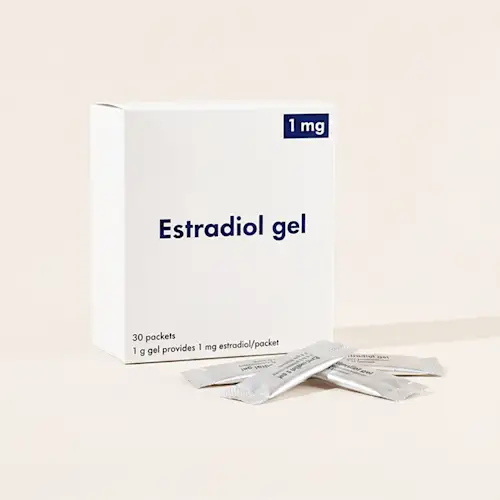
Estradiol Gel
$69.99 /mo
So researchers are continuing to study whether different hormone types and delivery methods influence cognitive aging over time, and how.
Biological Mechanisms: How Estrogen Affects the Brain
On top of its role in reproductive health, estrogen helps support brain function, including memory, learning, and overall cognitive performance. It helps brain cells communicate with each other, supports how brain cells use energy, and contributes to healthy blood flow in the brain.
During menopause, when estrogen levels decline significantly, these systems can be affected. Specifically, brain regions involved in memory and attention might be especially impacted. Also, as estrogen levels fall, certain brain cells may become more vulnerable to age-related changes.
On top of that, other studies suggest estrogen may help limit the buildup of proteins linked to Alzheimer’s disease when hormone therapy is started earlier along the menopause transition.
Risks and Benefits: HRT for Cognitive Health vs. Other Menopause Symptoms
HRT isn’t recommended as a strategy to prevent dementia. That said, it can still be a good option for managing certain menopause symptoms and supporting other health facets during the transition.
Indeed, it’s one of the most effective treatments for symptoms such as:
Hot flashes and night sweats
sleep issues
mood changes, like irritability, anxiety, and depression
Hair and skin changes
Vaginal dryness
Some research shows that it can also help prevent bone loss, which gets more common after menopause and increases the risk of osteoporosis and fractures.
Not to mention, many of those menopausal symptoms can also lead to cognitive challenges. For example, night sweats that lead to sleep issues that lead to fatigue can then make it harder to focus and retain new information the next day. So by helping with hot flashes, HRT could also indirectly help with brain fog.
But how HRT affects the body (and the risks and benefits) can depend on several factors, like:
Age
How long it’s been since menopause began
The type of hormones used
Personal and family health history
Because of all these factors, HRT is highly personalized. For women concerned about cognitive health, it can be helpful to think about HRT within the broader context of menopause care and other strategies like healthy lifestyle changes.
Special Considerations: Early, Premature, and Surgical Menopause
Women who reach menopause earlier than usual could experience different long-term health considerations, including potential effects on brain health. You might be wondering what we mean by “early.”
Menopause is defined as going 12 months in a row without a period. If it happens before 45, that’s considered early menopause, with premature menopause occurring before age 40. In both early and premature menopause, the body has lower estrogen levels for a longer period of time, which may increase the lifetime risk of conditions that estrogen protects against. This includes cardiovascular disease, osteoporosis, and possibly dementia.
Because of this extended period of estrogen deficiency, HRT is often recommended for women with early or premature menopause (unless they have a medical reason not to use it). Many clinical guidelines suggest continuing HRT at least until the average age of natural menopause, which is around age 51.
There’s also surgical menopause to consider. This happens when the ovaries are surgically removed, and it can also affect long-term brain health. This is because estrogen levels drop suddenly when the ovaries are removed, so symptoms of low estrogen may be more severe and abrupt. In fact, research suggests that women who experience surgical menopause may have a higher risk of cognitive decline if estrogen therapy is not started soon after surgery.
In these situations, getting treatment and individualized care are especially important.
Lifestyle and Modifiable Risk Factors for Brain Health
Research consistently shows that lifestyle and overall heart health play a major role in reducing dementia risk:
Get regular movement. Exercise supports healthy blood flow to the brain and is linked to better memory and cognitive function as we age.
Focus on eating well. Diets rich in fruits, vegetables, whole grains, healthy fats, and lean proteins are associated with better long-term brain health.
Try to improve sleep habits. Getting consistent, high-quality sleep supports memory and learning.
Stay social and work on lowering stress levels. Lowering stress and staying socially connected and mentally engaged may also help support cognitive function over time.
All of these habits can help with cardiovascular risk factors, too, and this is also especially important during and after menopause. It’s all interconnected: Conditions such as high blood pressure, high cholesterol, diabetes, and obesity can affect blood vessels in the brain and increase the risk of cognitive decline. Monitoring and treating these conditions when needed can help protect both heart and brain health.
A broad treatment plan that includes healthy lifestyle choices (possibly alongside HRT) can help support cognitive wellness throughout midlife and beyond.
How to Talk to Your Healthcare Provider About HRT and Dementia Concerns
If you’re curious about exploring HRT, an open conversation with a healthcare provider is a great first step. A menopause specialist will help explain the current research and also contextualize it around you so you can weigh the risks and benefits together.
Now, some pointers to take with you going into a consultation about HRT and dementia:
Be ready to go over your personal health history, including any family history of dementia or Alzheimer’s disease.
You may also want to talk about the severity of your menopause symptoms, your age, and when your symptoms began. If you’ve noticed memory changes or other cognitive concerns, mention them up front so they can help guide the conversation.
If you want more details, ask your provider to walk through the different types of hormone therapy that may be appropriate. It’s also a good opportunity to discuss the timing of treatment, specific hormones used, and whether an oral or transdermal option might be a better fit for you.
Any medical treatment, including HRT, isn’t a one-size-fits-all situation. Many treatment plans involve ongoing monitoring and adjustments over time. Regular follow-up visits can allow you and your provider to check in about how well it is or isn’t working and whether any changes are needed.
Approaching the conversation with questions and clear goals can help support shared decision-making.
Frequently Asked Questions
Does starting hormone replacement therapy prevent the development of Alzheimer’s disease?
Current research does not provide strong enough evidence to support using hormone replacement therapy specifically for the prevention of Alzheimer’s disease or other forms of dementia. While studies suggest that estrogen supports brain function by protecting neurons and maintaining blood flow, hormone therapy is primarily prescribed to manage menopause symptoms rather than as a preventative measure for cognitive decline.
How does the timing of starting hormone replacement therapy affect dementia risk?
The impact of hormone therapy on brain health may depend on the critical window of initiation. Research indicates that starting therapy before age 60 or within 10 years of the onset of menopause is generally considered neutral or potentially beneficial for brain health. Conversely, initiating hormone therapy after age 65 or more than 10 years after menopause has been linked to an increased risk of dementia.
Why is hormone replacement therapy often recommended for women who experience early menopause?
Women who reach menopause before age 45 or undergo surgical removal of the ovaries experience a longer period of estrogen deficiency, which can increase the lifetime risk of cardiovascular disease and cognitive decline. In these cases, clinical guidelines often suggest hormone therapy to replenish estrogen levels and support long-term health until at least the average age of natural menopause.
Related Content
https://www.myalloy.com/blog/dr-sharon-malone-unpacks-the-latest-headlines-on-hrt-and-dementia
https://www.myalloy.com/blog/signs-you-need-menopausal-hormone-therapy
https://www.myalloy.com/blog/menopause-breast-cancer-and-what-comes-next
https://www.myalloy.com/blog/frequent-utis-and-menopause-what-can-you-do
https://www.myalloy.com/blog/why-is-anxiety-worse-during-menopause
https://www.myalloy.com/blog/exciting-news-about-estrogen-and-alzheimers
https://www.myalloy.com/blog/bioidentical-hormone-replacement-therapy-insiders-guide
https://www.myalloy.com/blog/want-to-read-what-the-experts-have-to-say-about-menopause-and-hormones
Citations
The 2022 hormone therapy position statement of The North American Menopause Society. Menopause 2022;29(7):767-794. PMID:35797481.
View sourceJane Marjoribanks, Cindy Farquhar, Helen Roberts, Anne Lethaby, Jasmine Lee. Long-term hormone therapy for perimenopausal and postmenopausal women. Cochrane Database Syst Rev 2017;1(1):CD004143. PMID:28093732.
View sourceGuo-Qiang Zhang, Jin-Liang Chen, Ying Luo, Maya B Mathur, Panagiotis Anagnostis, Ulugbek Nurmatov, et al.. Menopausal hormone therapy and women's health: An umbrella review. PLoS Med 2021;18(8):e1003731. PMID:34339416.
View sourceP M Maki, N G Jaff. Brain fog in menopause: a health-care professional's guide for decision-making and counseling on cognition. Climacteric 2022;25(6):570-578. PMID:36178170.
View sourceChristina A Metcalf, Korrina A Duffy, Chloe E Page, Andrew M Novick. Cognitive Problems in Perimenopause: A Review of Recent Evidence. Curr Psychiatry Rep 2023;25(10):501-511. PMID:37755656.
View sourcePauline M Maki, Nicole G Jaff. Menopause and brain fog: how to counsel and treat midlife women. Menopause 2024;31(7):647-649. PMID:38888619.
View sourceYao-Yi Kuo, Hao-Yun Chang, Yu-Chen Huang, Che-Wei Liu. Effect of Whey Protein Supplementation in Postmenopausal Women: A Systematic Review and Meta-Analysis. Nutrients 2022;14(19). PMID:36235862.
View source
Subscribe
Go ahead, you deserve to
feel fantastic
By subscribing you agree to our Terms of Service & Privacy Policy.