Early Perimenopause in Your 30s: The 'Millennial Menopause
6 minute read

Summary
Perimenopause is the hormonal transition leading up to menopause, driven by fluctuating estrogen and progesterone levels. Although many women begin noticing changes in their 40s, symptoms can appear earlier, including in the late 30s. Early signs may include sleep disruption, mood shifts, irregular cycles, hot flashes, and vaginal dryness, often before obvious menstrual changes occur. Recognizing these patterns and tracking symptoms can help clarify when it may be time to discuss possible perimenopause and treatment options with a clinician.
Can Perimenopause Really Start in Your 30s?
Yes, women in their 30s can start noticing some symptoms of perimenopause. But let’s rewind for a moment and cover the basics first:
Perimenopause is the transition time leading up to menopause, which is officially reached once you’ve gone 12 months in a row without a period. The average age of menopause is 51. But the transition before that can begin years earlier. Perimenopause often lasts between four and seven years, though it can be shorter or longer depending on the person.
For many women, that means perimenopause starts in their 40s. But for some, symptoms can start sooner. Everything from genetics to certain medical conditions and lifestyle factors like smoking can influence when symptoms start.
Ahead, we’ll break down what perimenopause is, why it can sometimes begin earlier, and what to expect if it does.
Why Hormonal Changes Can Start Earlier Than Expected
Perimenopause starts when the ovaries begin to produce hormones less unpredictably, causing hormone levels and periods to become less predictable. Over time, estrogen levels gradually decline and then stay low once you reach menopause.
These shifting and declining estrogen levels impact a lot of body systems, including:
Mood
Sleep patterns
Temperature regulation
Skin and hair
Weight and body composition
That’s why symptoms can show up in many different ways. And in some cases, they may begin before you notice clear changes in your menstrual cycle.
Though it would be nice to have a simple one-and-done hormone test, unfortunately, it doesn’t work that way. Hormone levels naturally fluctuate throughout the month and across life stages, which means a single test doesn’t always give a clear answer.
Instead, perimenopause and menopause are often identified based on symptom patterns, cycle changes, age, and the broader clinical picture.
Early Symptoms Women Sometimes Notice in Their 30s
Symptoms can start out subtly, and they don’t always look the way people expect. Early signs can include things like: Sleep issues and fatigue. Hormonal changes can make it harder to fall asleep or stay asleep, and daytime fatigue often follows.
Mood changes. You might notice more anxiety, lower mood, or feeling less emotionally steady than usual.
Brain fog. Difficulty concentrating or general mental fatigue are some of the lesser-known symptoms that come up during midlife.
Temperature changes. You might get occasional hot flashes or night sweats. These tend to show up gradually and intermittently in the earlier stages of perimenopause.
Vaginal dryness and decreasing libido. You might notice vaginal dryness, discomfort with intercourse and/or changes in orgasm, which can all contribute to decreased libido.
Weight changes. Carrying more weight around the midsection—or gaining weight despite habits that used to work—can also be part of the picture.
And yes, cycle changes may be part of it, too. Irregular periods are one of the most recognizable signs of perimenopause, though for some women, other symptoms show up first.
When Period Changes Do (and Don’t) Show Up
Irregular periods are a hallmark of perimenopause, but they aren’t always the first sign to emerge. Things like sleep problems and mood swings tend to crop up first.
And, if there are menstrual irregularities early in perimenopause, they tend to be pretty subtle. For example, rather than a missed period altogether, you might notice that your period lasts three days instead of four (or the other way around), or your periods seem to be coming closer together.
As perimenopause progresses, longer gaps between periods often become more common before periods stop completely. Symptoms, in general, can also get more pronounced.
One important note: even if your periods are irregular, ovulation can still happen. That means pregnancy is still possible until menopause is officially reached.
What Else Could Cause These Symptoms in Your 30s?
Perimenopause isn’t the only possible cause of some of the symptoms we’ve gone over. Fatigue, mood changes, and irregular cycles can all have overlapping symptoms with other health conditions.
For example, similar symptoms can also be linked to:
Thyroid disorders
Stress or burnout
Anxiety or depression
Sleep disorders
Nutrient deficiencies
Certain medications
There’s also premature ovarian insufficiency (POI), a separate condition wherein normal ovarian function stops before age 40. While it can cause symptoms that look like perimenopause, it’s considered a different diagnosis and can require a separate evaluation and treatment approach.
This is just one reason clinicians usually look at the full picture before assuming hormones are the only cause. Your symptoms, cycle history, and medical background (and sometimes lab work) can all help guide next steps.
What to Track If You Suspect Early Perimenopause
If your body has been feeling a little less predictable than usual, it can be helpful to start tracking your symptoms. Sometimes seeing the pattern laid out in front of you is half the answer. And no need for a professional-grade spreadsheet with a color-coded system—you can use a pen and paper, the notes app on your device, or a cycle tracker.
A few things worth paying attention to:
Cycle changes. Jot down when your period starts, how long it lasts, whether the flow seems heavier or lighter than usual, and any skipped or unusually close-together periods.
Symptoms. If you’re experiencing hot flashes, night sweats, fitful sleep, mood changes, brain fog, headaches, or any changes in energy, write them down.
Lifestyle factors. This can help you figure out if (and what) is triggering your symptoms. Things like stress, getting sick, traveling, medication changes, drinking alcohol, or any major routine shifts can sometimes trigger or worsen symptoms.
Timing. It can be helpful to track if your symptoms happen around your cycle, randomly, or if they seem to cluster during certain weeks.
A few months of notes can give both you and your care team a much clearer picture of whether perimenopause may be part of what’s going on, or if you should explore something else.
When It’s Worth Talking to a Clinician
When your systems are ongoing and intrusive—meaning they mess with your sleep, mood, and day-to-day life—it’s a good time to reach out to a healthcare provider for guidance.
Instead of doing a lab test, a provider will likely go over your symptoms with you, ask about your menstrual history, and consider your general health profile.
From there, they can help you come up with a treatment plan, which could include various lifestyle strategies (like building more targeted exercise and eating habits) and various medications, both hormonal and non-hormonal.
If it turns out that you are experiencing perimenopause, Hormone Replacement Therapy (HRT) may be a good option. It works by replenishing the estrogen levels in your body and is the most effective treatment option for vasomotor symptoms such as hot flashes and night sweats.
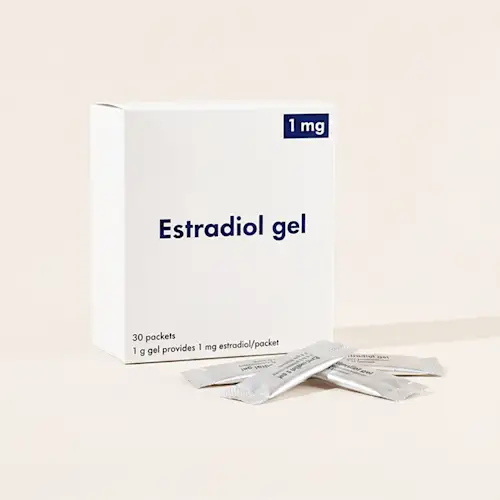
Estradiol Gel
$69.99 /mo
Regardless, your plan should be personalized for you based on your systems, health history, and personal preferences.
“Early perimenopause can feel unpredictable, and, at times, overwhelming – but it is not random, and it is not "all in your head". When we take time to recognize patterns and symptoms, we begin to replace confusion with clarity, opening the door to thoughtful, individualized treatment options, including menopausal hormone therapy when appropriate. Most importantly, your experience is real. This shifts, you're noticing, the changes, and how you feel – physically, mentally, and emotionally – are valid and worthy of attention. With the right support and understanding, there are meaningful ways to help you feel like yourself again.” - Dr. Amy Hayes
If you have any of these symptoms and want to explore your treatment options, you can connect with a menopause-trained clinician through Alloy today.
Frequently Asked Questions
Is there a specific blood test that can confirm I am in perimenopause?
While it would be convenient to have a single "one-and-done" test, a hormone test is often unreliable because hormone levels fluctuate significantly throughout the month and across different life stages. Instead, healthcare providers typically identify perimenopause by looking at the broader clinical picture, including your age, specific symptom patterns, and changes in your menstrual cycle.
Can I still get pregnant if my periods have become irregular during perimenopause?
Yes, it is still possible to get pregnant during this transition. Even if your periods are irregular or the gaps between them are getting longer, ovulation can still occur. You are only officially in menopause once you have gone twelve consecutive months without a period; until that point, pregnancy remains a possibility.
What is the difference between perimenopause and Premature Ovarian Insufficiency (POI)?
While both can cause similar symptoms in women under 40, Premature Ovarian Insufficiency (POI) is a distinct medical condition where normal ovarian function stops prematurely. Perimenopause is the natural transitional phase leading up to menopause. Because the symptoms overlap, it is important to consult a clinician to determine the correct diagnosis and the appropriate treatment approach for your specific situation.
Related Content
Citations
Nanette Santoro, Cassandra Roeca, Brandilyn A Peters, Genevieve Neal-Perry. The Menopause Transition: Signs, Symptoms, and Management Options. J Clin Endocrinol Metab 2021;106(1):1-15. PMID:33095879.
View sourceErin R Duralde, Talia H Sobel, JoAnn E Manson. Management of perimenopausal and menopausal symptoms. BMJ 2023;382:e072612. PMID:37553173.
View sourceCarolyn J Crandall, Jaya M Mehta, JoAnn E Manson. Management of Menopausal Symptoms: A Review. JAMA 2023;329(5):405-420. PMID:36749328.
View sourceNanette Santoro. Perimenopause: From Research to Practice. J Womens Health (Larchmt) 2016;25(4):332-9. PMID:26653408.
View sourceNanette Santoro, C Neill Epperson, Sarah B Mathews. Menopausal Symptoms and Their Management. Endocrinol Metab Clin North Am 2015;44(3):497-515. PMID:26316239.
View sourceYao-Yi Kuo, Hao-Yun Chang, Yu-Chen Huang, Che-Wei Liu. Effect of Whey Protein Supplementation in Postmenopausal Women: A Systematic Review and Meta-Analysis. Nutrients 2022;14(19). PMID:36235862.
View sourceGesthimani Mintziori, Stavroula Veneti, Kris Poppe, Dimitrios G Goulis, Eleni Armeni, C Tamer Erel, et al. EMAS position statement: Thyroid disease and menopause. Maturitas 2024;185:107991. PMID:38658290.
View sourceNicole E Carmona, Natalie L Solomon, Karen E Adams. Sleep disturbance and menopause. Curr Opin Obstet Gynecol 2025;37(2):75-82. PMID:39820156.
View source
Subscribe
Go ahead, you deserve to
feel fantastic
By subscribing you agree to our Terms of Service & Privacy Policy.