What are nad supplements and do they help in menopause?
5 minute read
Summary
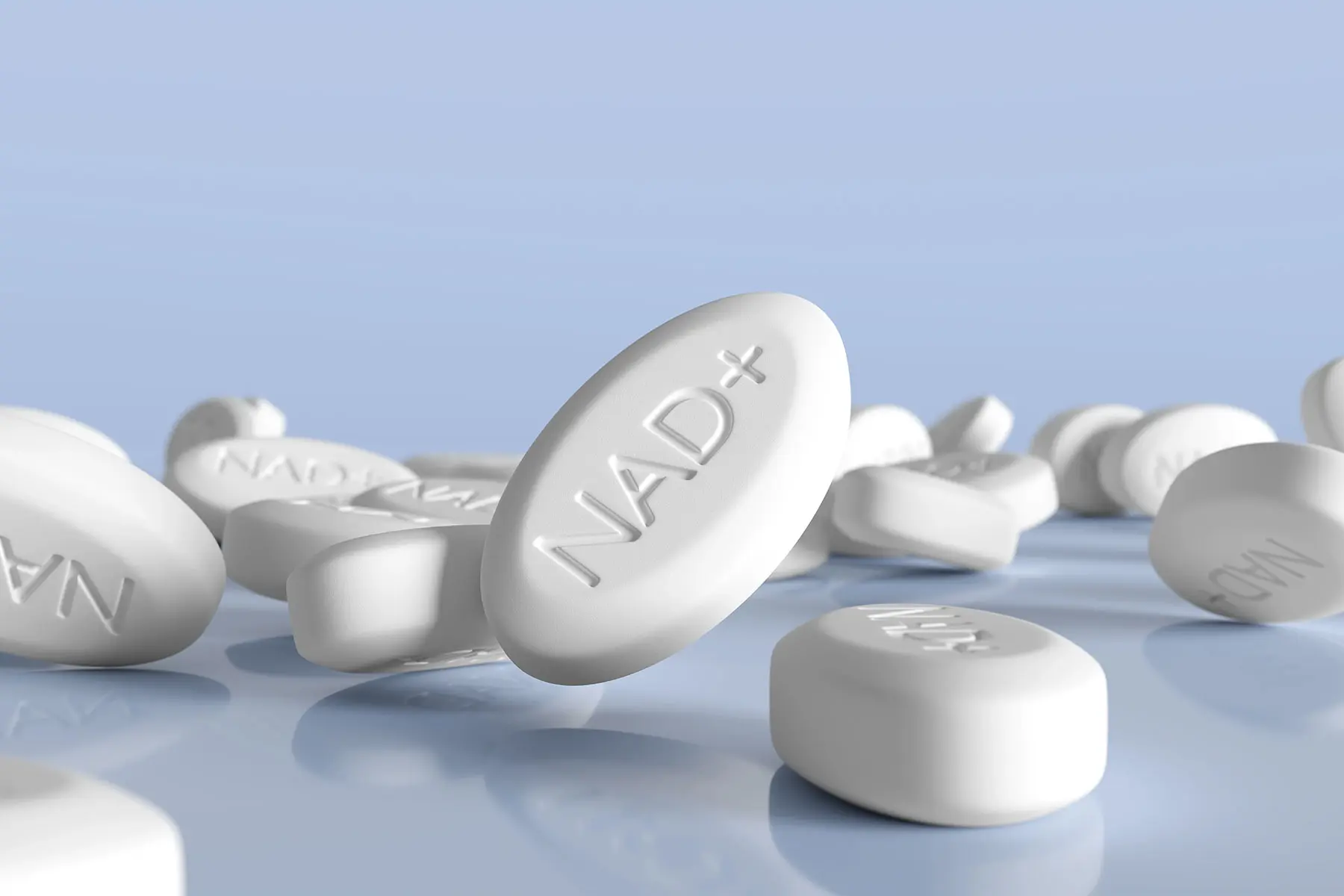
Nicotinamide adenine dinucleotide (NAD+) is a molecule involved in cellular energy production, DNA repair, and metabolic regulation. Levels appear to decline with age, which has fueled interest in supplements such as nicotinamide riboside (NR) and nicotinamide mononucleotide (NMN) marketed for energy, metabolism, and healthy aging. Some early human research in postmenopausal women suggests potential metabolic effects, but evidence for improving common menopause symptoms like fatigue, brain fog, or weight gain remains limited. Understanding how NAD supplements work, what current research shows, and how they compare with established menopause treatments can help midlife women make more informed health decisions.
What Is NAD and Why Is Everyone Talking About It?
NAD is short for nicotinamide adenine dinucleotide; a coenzyme found in every cell in the body. It plays an essential role in helping to convert nutrients into energy through processes in the mitochondria. NAD is also involved in DNA repair and cellular stress responses, and in the metabolic signaling pathways linked to aging.
Researchers have observed that NAD levels appear to decline with age in multiple types of tissues. This age-related decline has fueled much of the growing interest in information focused on NAD and aging.
What Are NAD Supplements?
Most NAD supplements do not contain nicotinamide adenine dinucleotide itself because the molecule is difficult for the body to absorb and use directly. Instead, these products contain compounds known as NAD precursors that the body converts into NAD. The most common forms include nicotinamide riboside, called NR, and nicotinamide mononucleotide, or NMN. Some formulations also include vitamin B3 derivatives that are involved in NAD production pathways.
NAD supplements are often advertised and marketed to consumers as energy and metabolism boosters, cognitive health support, or to promote a healthy life.
“It makes sense that women are interested in supplements that promise more energy and support for healthy aging during midlife. The science is still evolving, so it’s important to separate promising early research from claims that are moving faster than the evidence. At this time, we recommend looking at NAD supplements as being potentially supportive, but not a replacement for proven approaches to menopause care” - Dr. Judith Barreiro
Why NAD Supplements Are Marketed for Menopause Symptoms
Menopause is a time marked by hormonal and metabolic changes throughout the body that can overlap with normal symptoms of aging. Because of this overlap, supplements marketed for “cellular energy” or “healthy aging” are often targeted toward midlife women.
During perimenopause and menopause women experience fatigue, disrupted sleep, issues with cognition, and changes in exercise recovery. Because NAD is involved in cellular energy production, supplement advertising often connects these products with improved energy and mental clarity.
Many of these claims are based on laboratory findings, animal studies, or theoretical biological mechanisms and not on clinical human trials in menopause specific populations. It is important to remember that symptoms during menopause are often influenced by many factors that occur simultaneously and claims should be evaluated cautiously.
What the Science Actually Shows in Midlife Women
Compared to the extensive marketing surrounding these products, research on NAD supplements remains relatively limited. One study suggests potential improvement in insulin sensitivity in overweight or obese postmenopausal women with prediabetes. This study, however, did not consider several conditions known to affect metabolism during midlife.
Current evidence suggests potential metabolic effects, but much larger and longer-term human studies are still needed, and research specifically examining menopause symptoms remains limited at this time.
Could NAD Help with Metabolism or Weight Changes?
Although there is limited evidence, the question is still being asked: Could NAD help with metabolism and weight changes that are experienced during perimenopause and menopause?
Some NAD studies have focused on pathways involved in insulin signaling and mitochondrial activity, and existing human data suggests that there may be effects on insulin sensitivity in certain populations. However, the science currently available does not show that NAD supplements reliably cause meaningful weight loss.
Clinical data does show that weight can be managed during midlife with healthy nutrition, physical activity, maintaining sleep quality, and, if appropriate, hormone replacement therapy or other approved medical treatments.
Are NAD Supplements Safe?
The results of short-term studies suggest that NAD precursors are well tolerated. Reported side effects included flushing and mild gastrointestinal symptoms. Long-term safety data are still limited, particularly for higher-dose or prolonged use.
NAD derivatives are not prescription medications and are sold as dietary or nutritional supplements. Unlike prescriptions, nutritional supplements are not regulated by the FDA with the same level of oversight for effectiveness or uniformity. The standards for quality and purity may be different between manufacturers.
Women with health conditions or who are taking medications should discuss adding supplements with a clinician before starting them. Persistent fatigue, cognitive changes, or low energy should also be evaluated and not assumed to be caused only by menopause or aging. In some cases, these symptoms could reflect other health conditions including sleep disorders, thyroid disease, anemia, or depression.
How NAD Supplements Compare with Proven Menopause Treatments
At the root of many menopause symptoms are fluctuating and declining estrogen levels. Because of this, hormone replacement therapy remains the most effective treatment for these types of symptoms when they are part of the menopausal transition.
Some of the clinical information and discussion surrounding NAD supplements looks promising, and women may choose to incorporate them into their wellness routines. However, NAD supplements are not considered replacements for proven menopause treatment.
Questions to Ask Before Trying NAD Supplements
Before starting a supplement, it can help to identify the specific symptom or goal you are hoping to address. Looking at whether a product has been studied in human clinical trials may provide more useful information than marketing language alone. It is also important to consider whether claims are based mainly on animal studies, laboratory data, or actual patient outcomes.
Women may also benefit from considering other contributors to their symptoms such as stress, sleep quality, nutrition, or hormonal changes. Discussing symptoms with a clinician can help identify whether treatment may be appropriate.
Supplements may play a role in some wellness routines, but they are only one part of a larger approach to care during menopause and to a healthy life. In many cases, long-term health during midlife is influenced more strongly by consistent sleep, physical activity, nutrition, and appropriate medical care than by any single supplement category.
Frequently Asked Questions
What exactly is NAD and why is its decline significant for aging?
NAD, or nicotinamide adenine dinucleotide, is an essential coenzyme found in every cell of your body that helps mitochondria convert nutrients into energy. It also plays a critical role in DNA repair and cellular stress responses. Because researchers have observed that NAD levels naturally decline with age across various tissues, this decrease has become a major focus in the study of aging and metabolic signaling pathways.
Can NAD supplements effectively treat weight gain or low energy during menopause?
While NAD is involved in cellular energy production, most marketing claims regarding energy and weight loss are based on animal studies or laboratory findings rather than menopause-specific human trials. Some early data suggests potential improvements in insulin sensitivity for specific groups, but there is no reliable evidence that these supplements cause meaningful weight loss. Proven strategies for managing midlife symptoms—such as nutrition, physical activity, and hormone replacement therapy—remain more effective than supplements.
Are NAD supplements safe to use alongside other menopause treatments?
Short-term studies indicate that NAD precursors are generally well-tolerated, though some users report mild gastrointestinal issues or flushing. However, because these are sold as dietary supplements, they do not face the same rigorous FDA oversight as prescription medications, and long-term safety data is limited. It is essential to consult a clinician before starting them, especially since symptoms like persistent fatigue or cognitive changes can sometimes be caused by underlying conditions like thyroid disease or anemia rather than menopause alone.
Related Content
https://www.myalloy.com/blog/menopause-is-different-for-black-women-we-talked-about-it
https://www.myalloy.com/blog/signs-you-need-menopausal-hormone-therapy
https://www.myalloy.com/blog/are-your-menopause-symptoms-worse-than-expected
https://www.myalloy.com/blog/menopause-is-different-for-black-women-we-talked-about-it
https://myalloy.zendesk.com/hc/en-us/articles/25033598566035-How-does-Alloy-work
Citations
Mihoko Yoshino, Jun Yoshino, Brandon D Kayser, Gary J Patti, Michael P Franczyk, Kathryn F Mills, et al.. Nicotinamide mononucleotide increases muscle insulin sensitivity in prediabetic women. Science 2021;372(6547):1224-1229. PMID:33888596.
View sourceJinghui Liang, Feiling Huang, Zhaoqi Song, Ruiyi Tang, Peng Zhang, Rong Chen. Impact of NAD+ metabolism on ovarian aging. Immun Ageing 2023;20(1):70. PMID:38041117.
View sourceTejal R Waykar, Satish K Mandlik, Deepa S Mandlik. Sirtuins: exploring next-gen therapeutics in the pathogenesis osteoporosis and associated diseases. Immunopharmacol Immunotoxicol 2024;46(3):277-301. PMID:38318808.
View sourceNatália Cristina Gomes Carvalho Lima, Suellen Aparecida Ribeiro de Souza, Beatriz de Souza Vieira, Joyce Santana Rizzi, Thiago Antônio Moretti de Andrade, Camila Andrea de Oliveira, et al.. Short-term effects induced by nicotinamide in ovariectomized females. Can J Physiol Pharmacol 2021;99(4):439-447. PMID:32853529.
View sourceFatima Gunter-Rahman, Charleen D Adams, Ravikiran M Raju, Yu Zhang, Eunjung Alice Lee, Carmen Messerlian. Multiomic profiling reveals timing of menopause predicts prefrontal cortex aging and cognitive function. Aging Cell 2025;24(2):e14395. PMID:39501567.
View source
Subscribe
Go ahead, you deserve to
feel fantastic
By subscribing you agree to our Terms of Service & Privacy Policy.