Slynd: A progestin-only alternative for managing perimenopause and menopause symptoms
6 minute read

Summary
Perimenopause can be a confusing time for many women. Irregular periods and hot flashes begin to appear while pregnancy is still possible. It can be surprising to realize that even if your menstrual cycles are less predictable, contraception may still be an important part of your healthcare.
Slynd is a progestin-only birth control pill that may be prescribed during perimenopause. It is an option for women who need contraception or want help managing certain bleeding concerns. However, it is not the same as hormone replacement therapy, and it is not designed to treat many of the symptoms caused by declining estrogen.
Understanding what Slynd can and cannot do can help you and your physician decide whether it is the right option based on your symptoms and health history.
What Is Slynd?
Slynd is a progestin-only oral contraceptive that contains drospirenone. Progestin-only pills are sometimes called "mini-pills," although Slynd differs from older formulations because it uses drospirenone rather than earlier progestins.
Unlike combined birth control pills, Slynd does not contain any estrogen. This may make it an appropriate option for some women who cannot take estrogen-containing contraceptives because of certain medical conditions or individual risk factors.
Drospirenone also has some unique properties compared with older progestins, including mild antimineralocorticoid and antiandrogenic effects. What do these two things mean? Antimineralcorticoid, means that it helps to reduce water retention and bloating by preventing your body from holding on to less salt and water. Antiandrogenic means that the medication can help to reduce the effects of certain hormones that can contribute to acne, unwanted hair growth, oily skin and hair thinning. These properties add to its overall safety and side effect profile but do not change its primary purpose as a contraceptive.
Although Slynd may be used during perimenopause, its primary role is pregnancy prevention and, in some women, management of irregular bleeding. It is not considered a treatment for most menopause symptoms.
Why Birth Control Still Matters in Perimenopause
Perimenopause can last for several years before the time of the final menstrual period which signals menopause has begun. During this time hormones are fluctuating and menstrual cycles may become irregular and unpredictable. Because of this, ovulation becomes less predictable, but it does not stop consistently right away. Although pregnancy is less likely as age increases, it is still possible until menopause is reached.
Birth control may be prescribed in perimenopause for preventing pregnancy, but also to help manage heavy bleeding or cycle predictability.

Low-Dose Birth Control Pill
$39.99
What Slynd May Help with During Perimenopause
Slynd may be used when a woman still needs contraception during perimenopause, especially for those who have irregular cycles and might have difficulty knowing when ovulation will occur.
Slynd may help improve heavy bleeding for some women during perimenopause, and some users experience lighter periods over time. Spotting and breakthrough bleeding is also common, usually during the first few months of treatment.
Slynd may be prescribed for women who need or prefer contraception without estrogen. This might be relevant for women with certain health histories and depending on physician assessment. Examples of women for whom estrogen might not be appropriate include those who experience migraine with aura, those who smoke during perimenopause, those with certain heart disease risk factors, those with an elevated clotting risk, or those who cannot tolerate estrogen due to side effects. It’s also often a preferred option for patients who are breastfeeding or those who experience bothersome symptoms with a combination birth control pill.
What Slynd Does Not Treat: Classic Menopause Symptoms
It is understandable to assume that because Slynd contains a hormone, it would also treat menopause symptoms. However, not all hormone therapies serve the same purpose.
As we stated before, Slynd contains a progestin rather than estrogen. It is designed primarily for contraception and does not replace the estrogen that naturally declines during perimenopause and menopause.
Because of this, Slynd is not expected to relieve symptoms such as hot flashes, night sweats, sleep disruption, vaginal dryness, or other symptoms that are primarily related to declining estrogen.
When Estrogen Therapy May Be a Better Fit
Birth control and menopausal hormone therapy both involve hormones, but they are used for different clinical reasons.
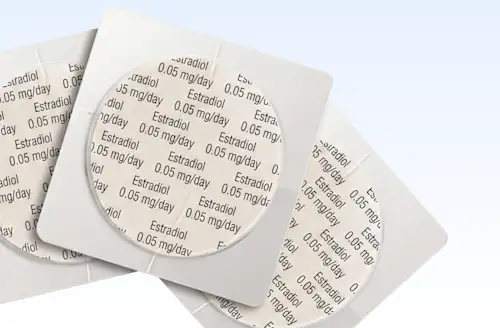
If hot flashes, night sweats, sleep disruption, or vaginal symptoms are the primary concerns, menopausal hormone therapy may be a more appropriate treatment option. Systemic estrogen therapy is the most effective treatment for vasomotor symptoms (hot flashes and night sweats( and may also improve sleep that is disrupted these.
Topical vaginal estrogen is often used when symptoms are limited to vaginal dryness, discomfort during sex, or urinary symptoms like frequency, urgency or recurrent urinary tract infections.
Patch Shortage? Not at Alloy.
It is important for women to know that hormone replacement therapy does not provide contraception.
Each woman should be evaluated by her physician to determine the best course of therapy for her needs. Often women will begin by staying on a combined oral contraceptive to control their symptoms and then transition to HRT when pregnancy prevention is no longer needed or when their menopause symptoms become the dominant concern.
Safety and Side Effects of Drospirenone-Only Pills
Like any hormonal medication, Slynd may cause side effects. Common side effects include irregular or breakthrough bleeding, breast tenderness, headache, and nausea. Spotting is especially common during the first few months as the body adjusts and often improves with continued use.
Spotting can be common when starting a progestin-only pill and bleeding patterns may change over time. Because Slynd does not contain estrogen, it generally avoids estrogen-related clotting concerns seen with combined hormonal contraceptives and is a safer option for patients with a higher risk of blood clot.
Stroke and cardiovascular risk depend on personal factors, including age, smoking, blood pressure, migraine history, clotting history, cardiovascular history.
Drospirenone may affect potassium levels in some patients. This matters most for women who have certain conditions that can increase potassium such as kidney disease and adrenal disease and for those who are taking some medications such as certain blood pressure medications, potassium supplements, and spironolactone. Having a set of baseline labs can help to monitor potassium levels.
Hormonal contraception has been associated with a small increase in the absolute risk of breast cancer in some studies. Individual risk depends on many factors, including age, personal and family history, and the type of hormonal contraception being used.
How to Decide If Slynd Is Right for You
Choosing the right treatment during perimenopause starts with identifying the symptoms that are causing the greatest disruption. Some women primarily need reliable contraception or help managing irregular bleeding, while others are looking for relief from hot flashes, night sweats, vaginal symptoms, or sleep disruption.
Because treatment needs often change throughout the menopause transition, the best approach may also change over time. Menopause-specialized physicians can help determine whether contraception, hormone replacement therapy, nonhormonal treatment, or a combination of these is most appropriate.
You do not have to sort through the different hormone options on your own, our board-certified menopause doctors at Alloy can help you find the right option. Our goal is to find the treatment that best matches your symptoms, medical history, and personal preference.
Frequently Asked Questions Can Slynd help relieve classic menopause symptoms like hot flashes and night sweats?
No, Slynd is not designed to treat classic menopause symptoms. Because it is a progestin-only birth control pill, it does not contain the estrogen needed to relieve symptoms caused by declining estrogen levels, such as hot flashes, night sweats, sleep disruptions, or vaginal dryness. If these symptoms are your primary concern, menopausal hormone therapy (HRT) or other targeted treatments may be a more appropriate choice.
Why do I still need a birth control pill like Slynd during perimenopause?
Even though your periods may become irregular and less predictable during perimenopause, pregnancy is still clinically possible until you completely transition into menopause. Slynd provides reliable, estrogen-free contraception during this unpredictable time. Additionally, it can help manage heavy or irregular bleeding, which is a common complaint during the menopausal transition.
What makes Slynd different from traditional birth control pills?
Unlike traditional combined oral contraceptives, Slynd contains zero estrogen, making it a safer option for women who have specific health risks, such as a history of migraines with aura, smoking, or blood clot concerns. It uses a unique progestin called drospirenone, which features mild antimineralocorticoid and antiandrogenic properties. This means it can also help reduce bothersome side effects like water retention, bloating, hormonal acne, and thinning hair.
References
Slynd (drospirenone) [package insert]. Exeltis USA, Inc.; 2024.
American College of Obstetricians and Gynecologists. Hormone Therapy for Menopause. FAQ. Updated 2024.
The Menopause Society. The 2022 hormone therapy position statement of The North American Menopause Society. Menopause. 2022;29(7):767-794. doi:10.1097/GME.0000000000002028
Regidor PA, Mueller A, Mayr M. Pharmacological and metabolic effects of drospirenone as a progestin-only pill compared to combined formulations with estrogen. Womens Health (Lond). 2023;19:17455057221147388. doi:10.1177/17455057221147388
Tracy EE. Contraception: Menarche to menopause. Obstet Gynecol Clin North Am. 2017;44(2):143-158. doi:10.1016/j.ogc.2017.02.001
Lambert M, Begon E, Hocké C. Contraception for women after 40: CNGOF Contraception Guidelines. Gynecol Obstet Fertil Senol. 2018;46(12):865-872. doi:10.1016/j.gofs.2018.10.004
Leme de Barros VIPV, Oliveira ALML, do Nascimento DJ, et al. Use of hormones and risk of venous thromboembolism. Rev Bras Ginecol Obstet. 2024;46:e-rbgo66. doi:10.1055/s-0044-1787193
Gompel A, Plu-Bureau G. Are we overestimating the stroke risk related to contraceptive pills? Curr Opin Neurol. 2014;27(1):29-34. doi:10.1097/WCO.0000000000000050
Hadizadeh F, Koteci A, Karlsson T, et al. Hormonal contraceptive formulations and breast cancer risk in adolescents and premenopausal women. JAMA Oncol. 2025;11(12):1497-1506.
Duralde ER, Sobel TH, Manson JE. Management of perimenopausal and menopausal symptoms. BMJ. 2023;382:e072612. doi:10.1136/bmj-2022-072612
Related Content
https://www.myalloy.com/blog/heres-what-you-need-to-know-about-the-new-otc-birth-control-pill-and
https://www.myalloy.com/blog/estradiol-patch-vs-pill-vs-spray-whats-right-for-me
https://www.myalloy.com/blog/frequent-utis-and-menopause-what-can-you-do
https://www.myalloy.com/blog/im-in-my-40s-and-am-having-irregular-periods-am-i-in-perimenopause
https://www.myalloy.com/blog/bioidentical-hormone-replacement-therapy-insiders-guide
https://www.myalloy.com/blog/your-perimenopause-and-menopause-questions-answered-by-a-doctor
https://www.myalloy.com/blog/why-does-menopause-make-sex-hurt
https://myalloy.zendesk.com/hc/en-us/articles/25033598566035-How-does-Alloy-work
https://myalloy.zendesk.com/hc/en-us/articles/25740406062227-Are-your-products-bioidentical
Citations
Regidor PA, Mueller A, Mayr M. Pharmacological and metabolic effects of drospirenone as a progestin-only pill compared to combined formulations with estrogen. Womens Health (Lond). 2023;19:17455057221147388. PMID:36744531.
View sourceLambert M, Begon E, Hocké C. Contraception for women after 40: CNGOF Contraception Guidelines. Gynecol Obstet Fertil Senol. 2018;46(12):865-872. PMID:30424983.
View sourceGompel A, Plu-Bureau G. Are we overestimating the stroke risk related to contraceptive pills? Curr Opin Neurol. 2014;27(1):29-34. PMID:24300795.
View sourceLeme de Barros VIPV, Oliveira ALML, do Nascimento DJ, et al. Use of hormones and risk of venous thromboembolism. Rev Bras Ginecol Obstet. 2024;46. PMID:38765519.
View sourceHadizadeh F, Koteci A, Karlsson T, et al. Hormonal Contraceptive Formulations and Breast Cancer Risk in Adolescents and Premenopausal Women. JAMA Oncol. 2025;11(12):1497-1506. PMID:41165687.
View sourceTracy EE. Contraception: Menarche to Menopause. Obstet Gynecol Clin North Am. 2017;44(2):143-158. PMID:28499527.
View sourceOelkers W. Effects of estrogens and progestogens on the renin-aldosterone system and blood pressure. Steroids. 1996;61(4):166-171. PMID:8732994.
View source
Subscribe
Go ahead, you deserve to
feel fantastic
By subscribing you agree to our Terms of Service & Privacy Policy.